
National News
India Tightens Silver Imports; Government Approval Now Mandatory For Silver Bars
Move Follows The Recent Import Duty Hike and Aims To Prevent Duty Arbitrage Through The India-UAE Trade Agreement While Protecting Foreign Exchange Reserves.


India has introduced stricter controls on silver imports in a significant policy move aimed at preventing traders from exploiting a newly created duty differential following the government’s recent increase in import taxes on precious metals. The decision comes amid concerns that lower-duty silver imports through the India-UAE trade agreement could become a route to bypass higher tariffs imposed on bullion imports.
To address this issue, the government has shifted certain categories of silver imports from the “Free” category to “Restricted,” meaning importers will now require government approval and licensing before bringing silver into India. The move forms part of broader efforts to regulate precious metal inflows, protect foreign exchange reserves, and plug potential trade loopholes.
According to a notification issued by the Directorate General of Foreign Trade (DGFT) on May 16 through Notification No. 17/2026–27, silver bars under HS codes 71069221 and 71069229, including 99.9% purity silver bars, have now been brought under the restricted category with immediate effect. The new regulation also applies to silver alloys containing gold and platinum.
The policy revision follows the government’s earlier decision on May 12 to increase import duties on gold and silver from 6% to 15%, in addition to a 3% Integrated Goods and Services Tax (IGST) on bullion imports.
The concern emerged due to provisions under the India-UAE Comprehensive Economic Partnership Agreement (CEPA), which came into effect on May 1, 2022. Under the agreement, India is gradually reducing tariffs on silver imports from the UAE from 10% to zero over a ten-year period ending in 2031. At present, silver imports from the UAE attract a concessional tariff of 7%.
Before the recent duty hike, India’s standard silver import duty stood at 6%, leaving minimal incentive for traders to reroute imports through Dubai. However, after the increase to 15%, the gap between the regular tariff and the UAE’s concessional rate widened to eight percentage points, creating a strong financial incentive for traders to channel global silver shipments through Dubai.
Industry think tank Global Trade Research Initiative (GTRI) highlighted that the wider tariff gap could potentially trigger large-scale arbitrage-driven imports from the UAE. The new licensing requirement is therefore expected to provide the government with greater control over the quantity and timing of silver imports, while reducing the possibility of duty circumvention.
The restrictions, however, will not apply to 100% Export Oriented Units (EOUs), Special Economic Zones (SEZs), or companies importing silver under export-promotion schemes such as Advance Authorisation for products including jewellery manufacturing. These exemptions ensure that export-focused industries continue to have access to silver for production requirements.
Unlike silver, gold imports have not been moved into the restricted category as the potential tariff advantage under the UAE agreement remains relatively small at around 1%, reducing concerns over large-scale arbitrage activity.
The move also comes amid a surge in precious metal imports. India’s silver imports crossed $12 billion in FY2026, recording a significant 150% increase over the previous year. Meanwhile, gold imports rose by over 24% to a record $71.98 billion in FY2025–26, despite shipment volumes declining 4.76% to 721.03 tonnes.
The sharp rise in imports has added to government concerns, with the latest measures designed to curb non-essential imports, maintain tighter oversight over precious metal inflows and reduce pressure on foreign exchange reserves amid rising crude oil prices and continuing global geopolitical uncertainties.


National News
Vibrant Hues Of Celebration: Elevate Your Navratri Look With Kalyan Jewellers’ Huescape Collection
Kalyan Jewellers’ Huescape Collection Blends Handcrafted Gold With Vibrant Gemstones, Bringing A Contemporary Burst Of Colour To Navratri Celebrations.
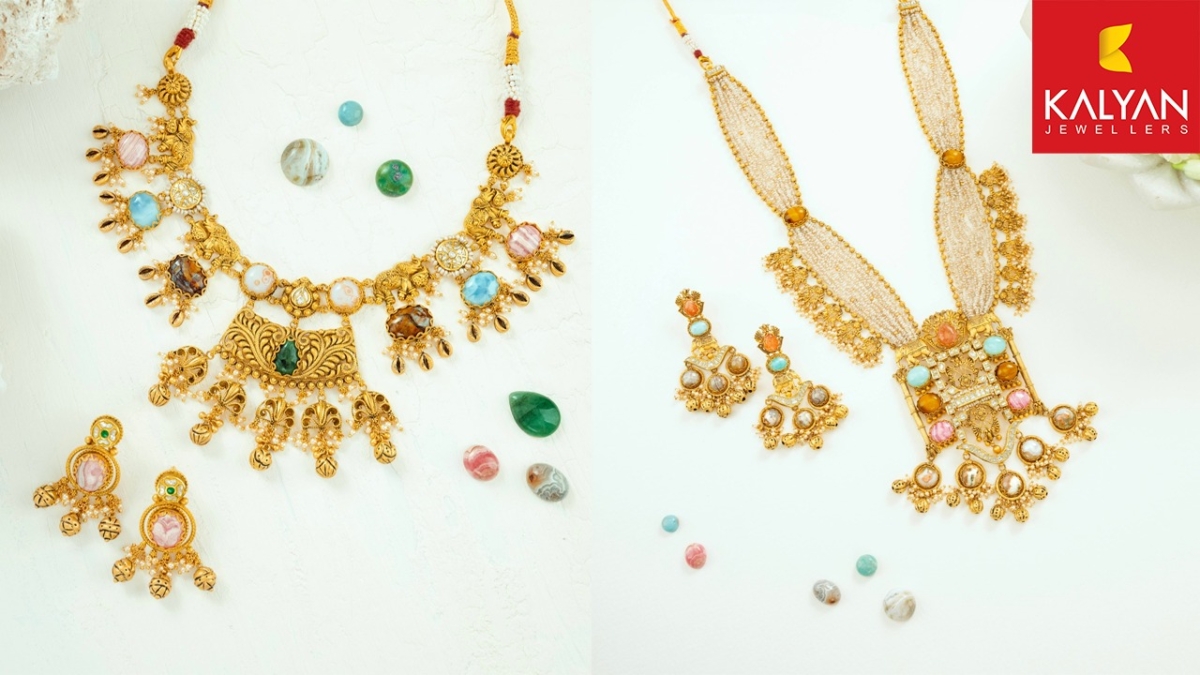
Celebrating the power, grace, and vibrant energy of the feminine spirit during Navratri, the world of fine jewellery is witnessing a refreshing shift from traditional all-gold ensembles to radiant, gemstone-adorned creations. As each day of the festival highlights a distinct color palette and mood, today’s modern women seek versatile adornments that express their personal style while honoring heritage. Capturing this essence of festive transformation, Kalyan Jewellers presents the Huescape Collection, a refined celebration where meticulously handcrafted gold meets a delicate palette of pastel and vibrant gemstones. Perfectly suited to elevate both daytime festive rituals and lively Garba evenings, each creation seamlessly complements the nine colors of Navratri, delivering heirloom-worthy jewellery that remains both timeless and contemporary.
Pastel Heritage Set
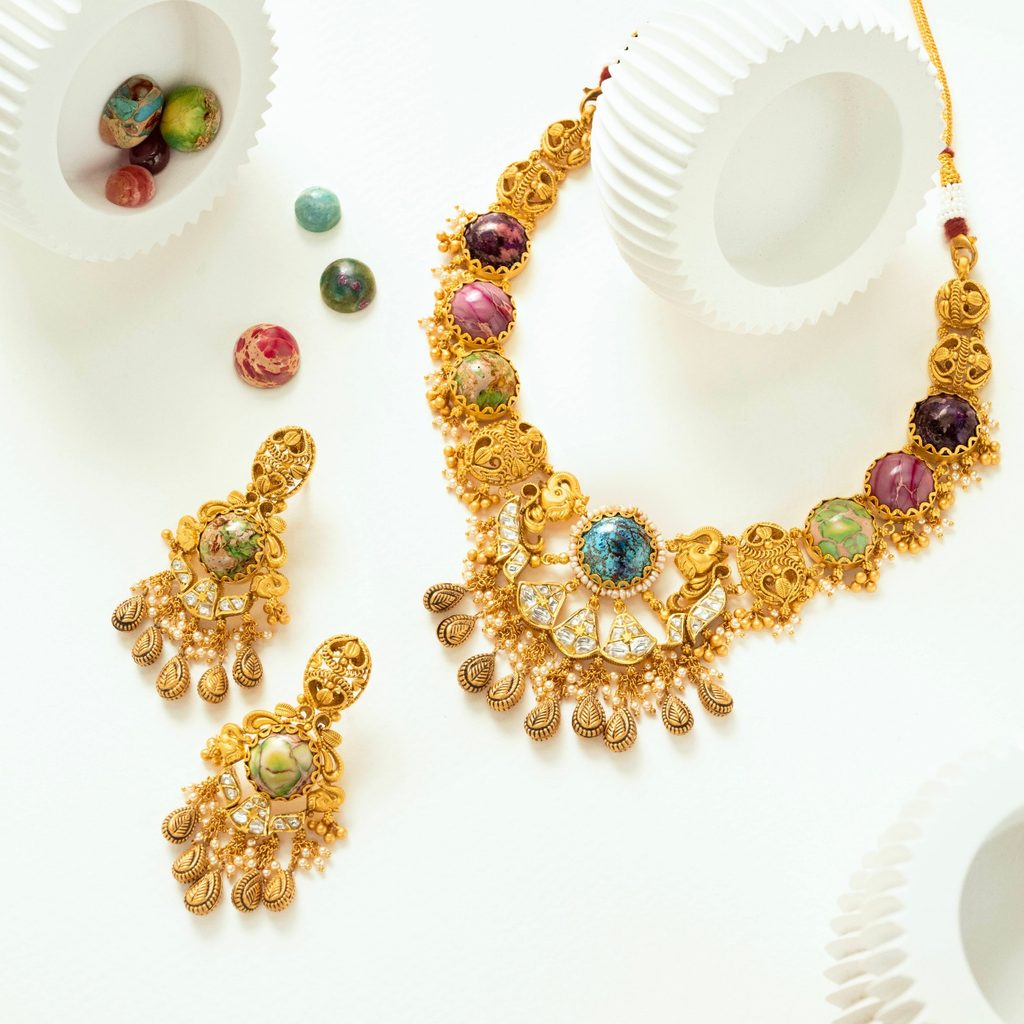
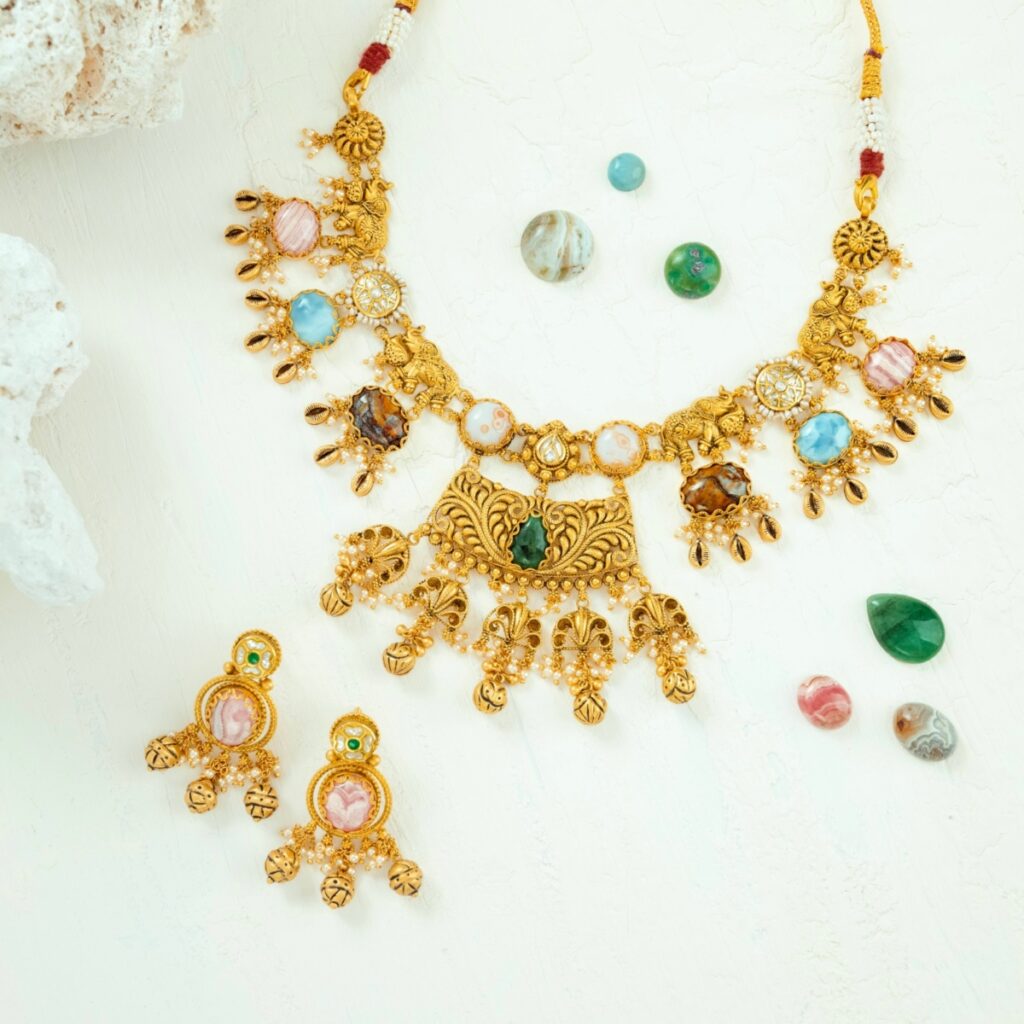
Perfect for Navaratri’s vibrant nine-day celebrations, this gold choker and earring duo reimagines heritage craft with a playful pastel twist. Rounded gemstones in ametrine, aquamarine, morganite, prehnite, chrysoprase and sunstone bring soft pops of colour to intricate gold detailing, making it a versatile choice for festive dressing. The ornate craftsmanship is balanced by a light, contemporary mood, reflecting the growing appeal of coloured gemstone jewellery among modern brides and jewellery enthusiasts.
The matching earrings add gentle movement and pastel charm, while the set brings a refreshing modernity to traditional festive dressing ideal for adding a pop of colour to Navaratri celebrations and beyond.
Pastel Mosaic Necklace Set
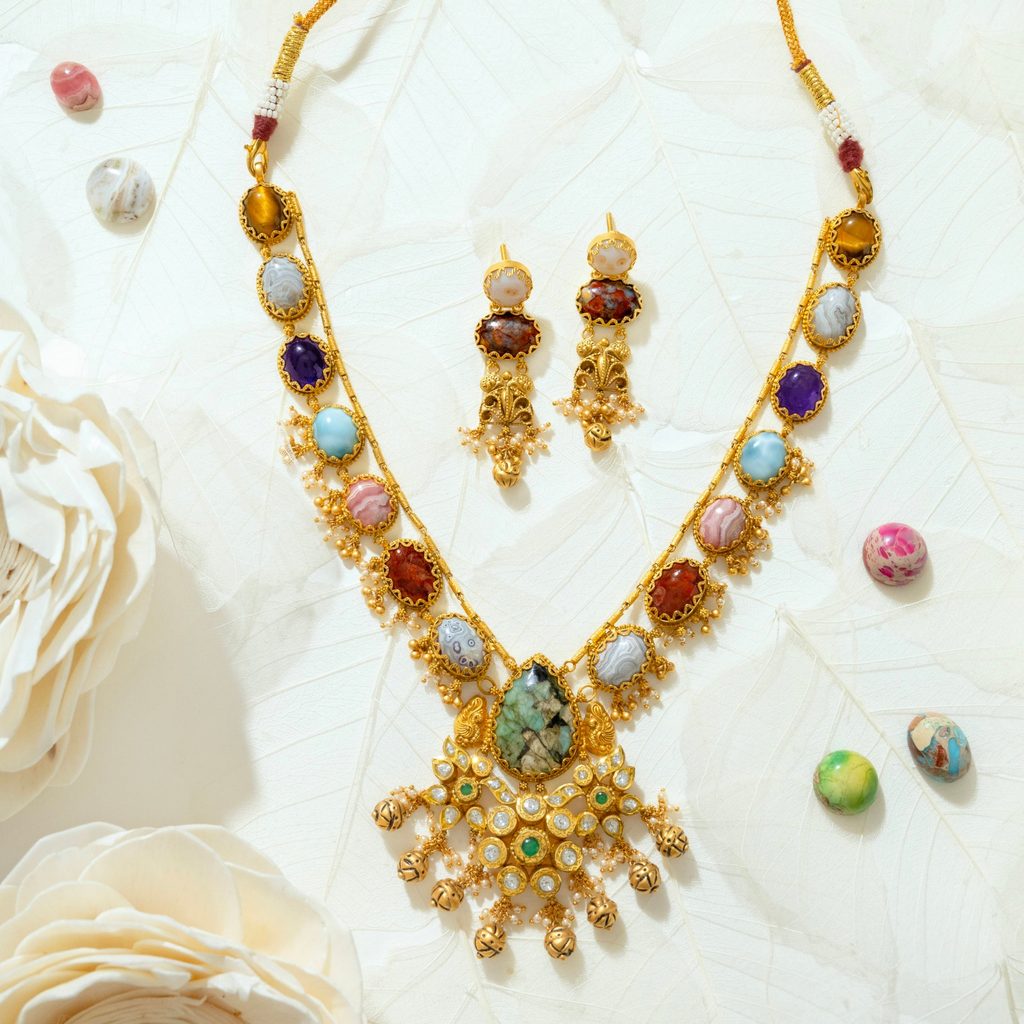
A tapestry of design, this long necklace pairs intricate gold craft with pastel stones in aqua, blush, and amber tones, featuring aquamarine, morganite, sunstone, and prehnite. The centrepiece glows with a mosaic of gemstones, framed by layered golden detailing, while delicate pearl strands soften the look with fluidity. Perfect for Navaratri’s nine days of colour and celebration, the necklace brings a vibrant yet elegant touch to festive dressing.
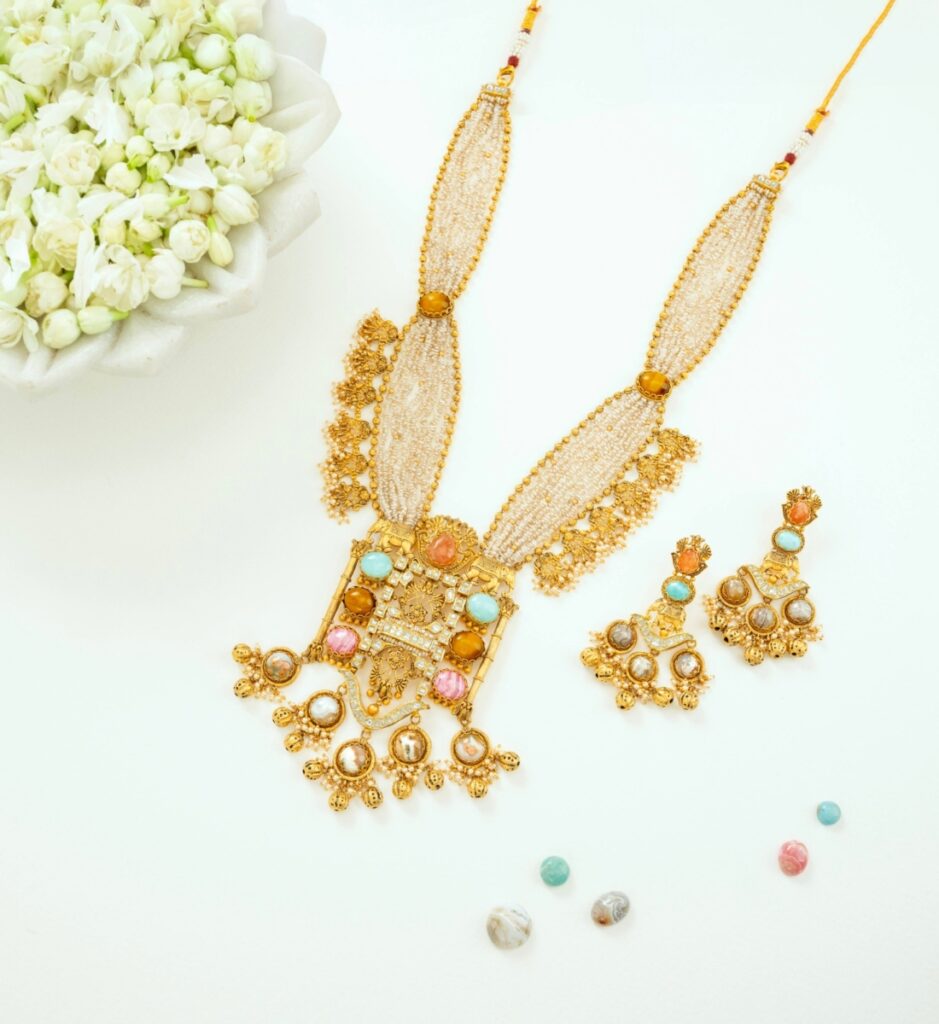
Matching earrings echo the pastel play, balancing tradition with a modern sensibility. An artistic statement that turns jewellery into wearable design, reflecting the growing allure of coloured gemstones among contemporary connoisseurs and modern brides.
Pastel Harmony Necklace Set
Gold meets colour in perfect balance, making this necklace avibrant choice for Navaratri’s nine days of festive dressing. Gemstones like blush-pink morganite, softblue aquamarine and earthy tiger’s eye are set against intricate gold detailing, creating a rich yet contemporary palette. The necklace flows with ornate motifs and delicate dangling elements that add lightness and rhythm, while a central green chrysoprase stone brings depth and contrast to the design. Matching earrings highlight soft pink morganite drops with a playful finish.
A statement that brings together the richness of traditional craftsmanship with the joyful colours and modern spirit of Navaratri.Pastel Harmony Necklace Set Gold meets colour in perfect balance, making this necklace a vibrant choice for Navaratri’s nine days of festive dressing. Gemstones like blush-pink morganite, softblue aquamarine and earthy tiger’s eye are set against intricate gold detailing, creating a rich yet contemporary palette. The necklace flows with ornate motifs and delicate dangling elements that add lightness and rhythm, while a central green chrysoprase stone brings depth and contrast to the design. Matching earrings highlight soft pink morganite drops with a playful finish. A statement that brings together the richness of traditional craftsmanship with the joyful colours and modern spirit of Navaratri.
Pastel Radiance Necklace Set
A golden canvas brought to life with gemstones in lilac ametrine, aqua aquamarine, blush morganite and deep berry hessonite garnet, this necklace captures the vibrant spirit of Navaratri. The centrepiece features a striking green chrysoprase, framed by pastel accents and intricate gold danglers, creating a rich interplay of colour and craftsmanship. Each gem along the neckline adds its own hue to the spectrum, echoing the joy and vibrancy of the nine-day celebration. The earrings complement the necklace with stacked colour and ornate goldwork, bringing a festive finish to the look. A radiant expression of tradition reimagined through a softer, contemporary palette.
Pastel Blossom Necklace Set
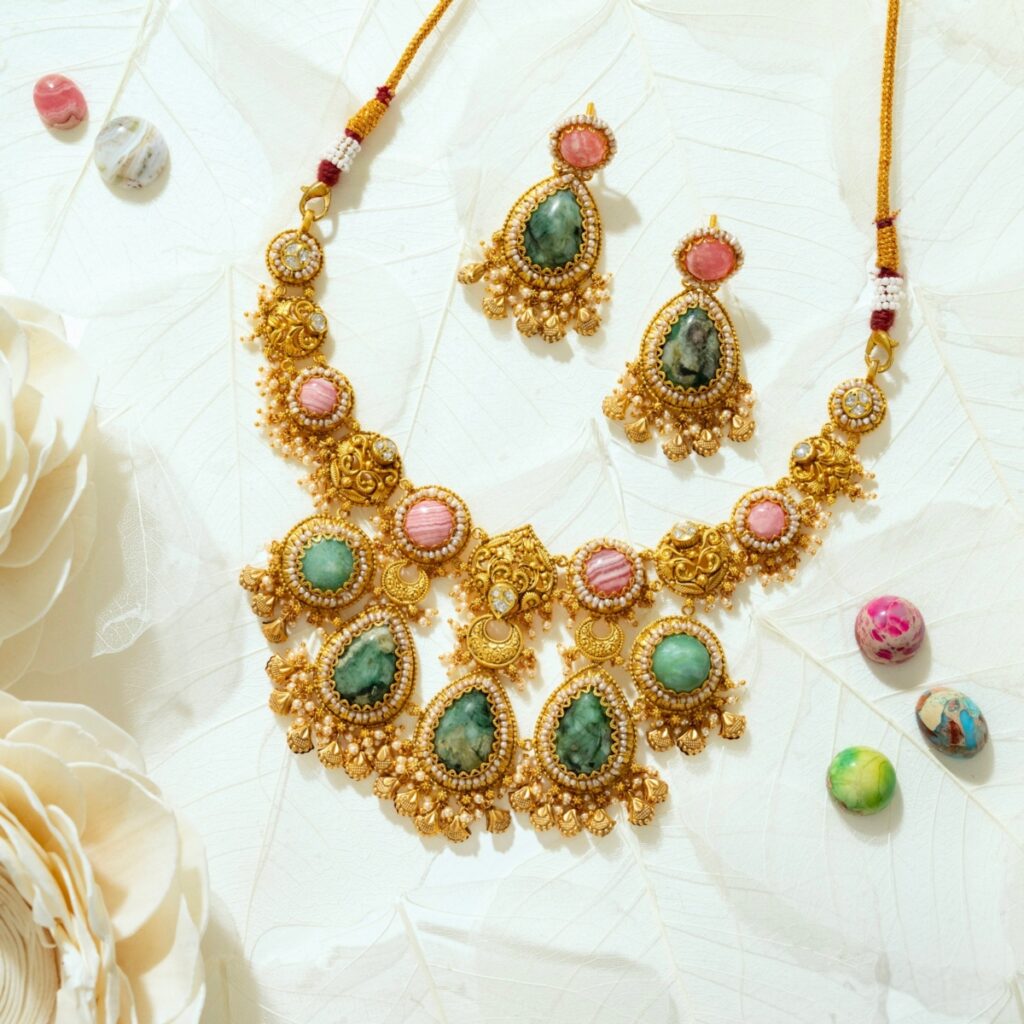
Teardrop green chrysoprase gemstones framed in delicate pearls form the heart of this gold necklace, bringing a fresh pop of colour to Navaratri dressing. Blush-pink rhodochrosite stones add a soft contrast, creating a harmonious pastel palette that complements the vibrancy of the nine-day celebration. Ornate gold detailing flows around each gem, adding depth and texture, while matching earrings mirror the teardrop motif, balancing boldness with grace. Rooted in traditional craftsmanship yet painted in lighter, contemporary hues, the set brings an elegant and modern touch to festive celebrations
Pastel Prism Necklace Set
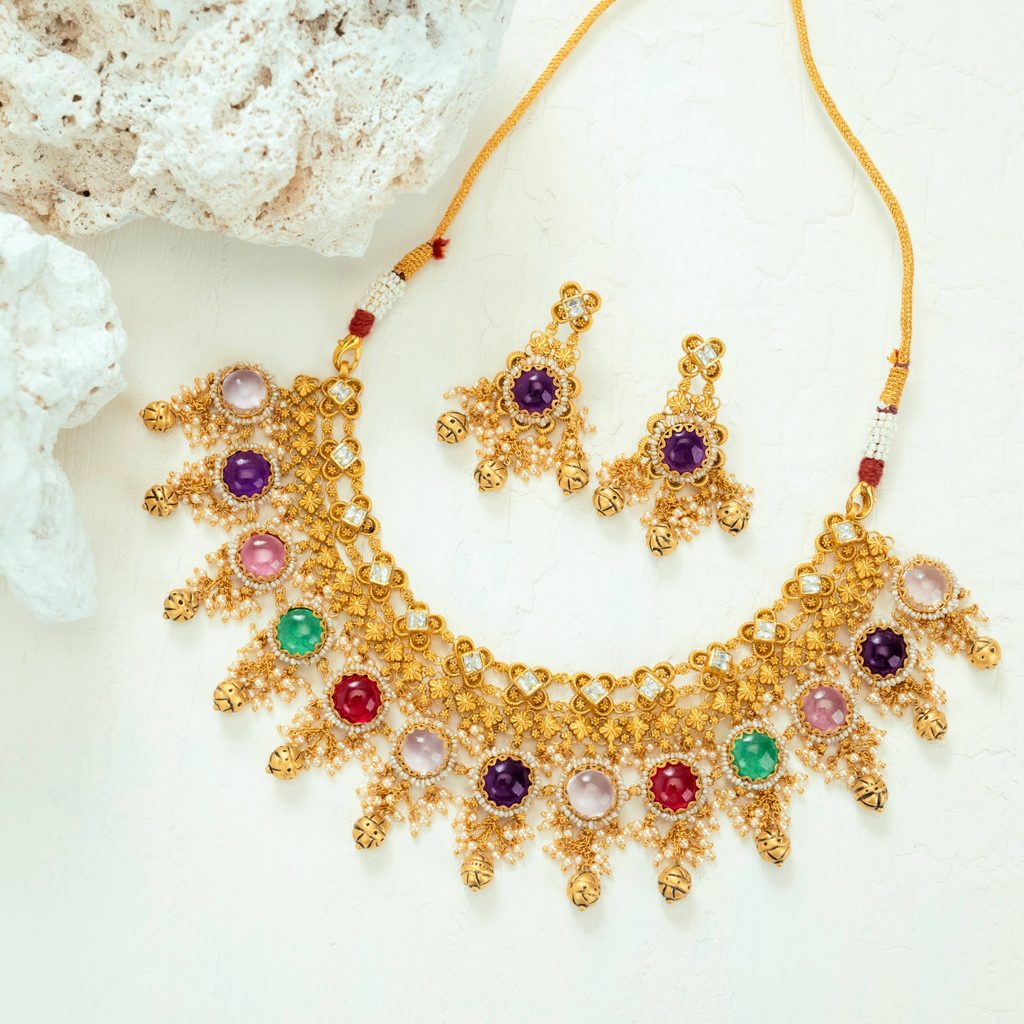
A radiant line-up of gemstones in lilac amethyst, rich emerald, deep ruby and soft rose quartz, each framed in gold, brings the vibrant spirit of Navaratri to life. The necklace forms a rhythmic pattern, with every gemstone adding a distinct brushstroke of colour, echoing the joy and energy of the nine-day celebration. Dangling gold motifs introduce light movement, enhancing its playful charm, while matching earrings carry the same vibrant palette in a compact form. A striking expression of festive elegance that transforms traditional gold into a kaleidoscope of soft, modern hues.



MGA Strengthens Regional Gold Industry Cooperation Through Six MoUs At MGF 2026

GJC’s 10th Edition Of India Gem & Jewellery Show (GJS2026 Diwali Edition) To Shine Bright At Jio World Convention Centre, Mumbai From October 2–4, 2026

ICA-GemLab To Open India’s First Gemological Laboratory In Surat

Royal Chain Files Draft Papers For Rs 1,000-Crore IPO
GJC’s 10th Edition Of India Gem & Jewellery Show (GJS2026 Diwali Edition) To Shine Bright At Jio World Convention Centre, Mumbai From October 2–4, 2026

Vibrant Hues Of Celebration: Elevate Your Navratri Look With Kalyan Jewellers’ Huescape Collection
-
 National News17 hours ago
Royal Chain Files Draft Papers For Rs 1,000-Crore IPO
-
 ShowBuzz13 hours ago
GJC’s 10th Edition Of India Gem & Jewellery Show (GJS2026 Diwali Edition) To Shine Bright At Jio World Convention Centre, Mumbai From October 2–4, 2026
-
 National News14 hours ago
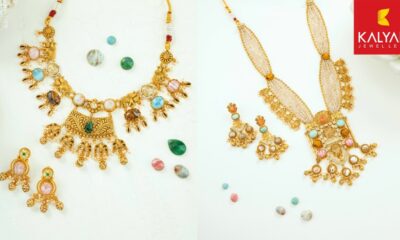
Vibrant Hues Of Celebration: Elevate Your Navratri Look With Kalyan Jewellers’ Huescape Collection
-
 New Premises14 hours ago
ICA-GemLab To Open India’s First Gemological Laboratory In Surat
