National News
India gold market update: Record high prices, accompanied by investment interest
Price surge dims jewellery demand, while investment interest lingers, Gold ETFs see unprecedented inflows in January

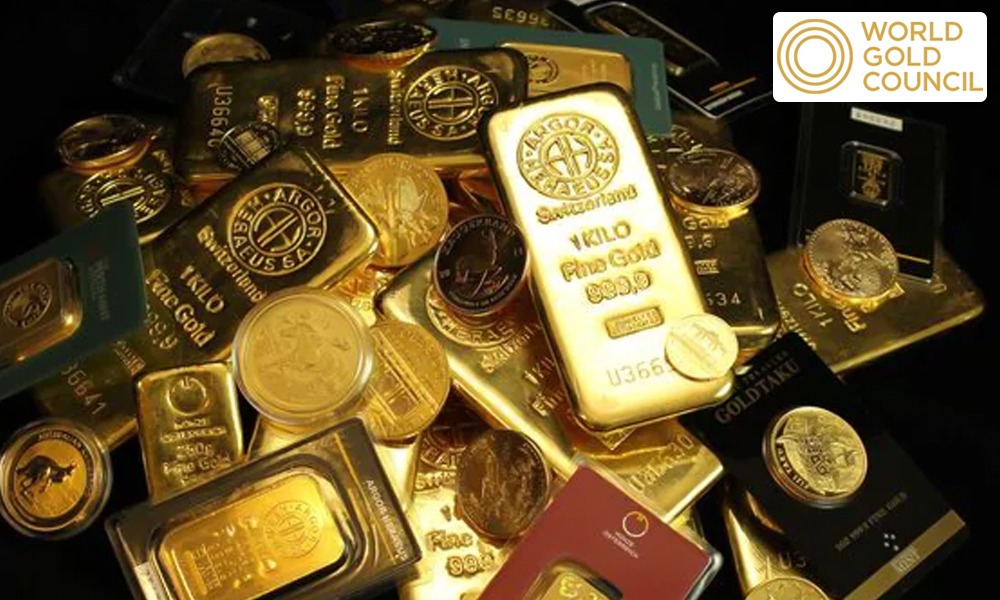
Gold achieves a new peak
Heading into 2025, gold has not only reversed the price moderation seen in November-December (a decline of 6%), but it has also repeatedly hit new -record highs. So far in 2025,1 the LBMA gold price AM in USD has surged by US$286/oz or 10% to US$2,938/oz. Domestic prices have been rising in parallel with international prices, rising by 14% to a record INR86,831/10g,2 with the higher gains attributed to the weakness in the INR against the USD (1.1% depreciation y-t-d). Our analysis indicates that the upward climb in gold prices can be attributed to a combination of geopolitical risks, growing concerns about inflation, and increased investment flows.
Union Budget 2025-26: key highlights pertaining to gold
One of the key takeaways from the Union budget presented on 1 February for gold is that the import duty hasn’t been changed. In the run-up to the budget there were worries that the government might hike the duty due to the rise in gold imports after it reduced the duty by 9% back in July 2024
On the other hand, the government cut the customs tariff on gold jewellery from 25% to 20%. This is likely done as part of the overall rationalisation of tariffs across commodities. However, since jewellery imports aren’t that significant and are limited to high-end jewellery (and of low caratage), this cut in duty is unlikely to have much impact on domestic jewellery production
It was also announced that new tariff lines will be introduced under the HSN codes3 for precious metal from 1 May to distinguish imports of precious metals in various forms. The new tariff lines will differentiate gold imports in bar form from other types. This is done to address the disruptions caused by imports of gold in forms such as platinum alloy and gold paste. From May, the tariff rates can differ based on the new classification
The government has also decided not to issue any sovereign gold bonds as part of its market borrowing programme. This could work in favour of gold ETFs, as investors looking for gold-related financial products may turn to ETFs instead.
Price surge takes shine out of jewellery demand, maintains investment interest
The rally in gold prices to repeated new all-time highs since the start of the year has weighed heavily on the retail demand for gold jewellery. Uncertainty about announcements in the Union Budget also influenced buying activity.
Anecdotal reports indicate that demand dropped sharply in January and the weakness persisted into February, despite the end of the inauspicious period in the Hindu calendar (15 Dec – 15 Jan) and the usual-post Union Budget pick-up in demand. Wedding-related purchases too have been subdued, suggesting that many consumers had front loaded their purchases when prices dipped in November. Rather than making fresh purchases, many buyers are opting to exchange old gold for new jewellery. Additionally, as gold prices surged past previous thresholds, many consumers are also taking the opportunity to sell old gold and lock in profits.
This slowdown in jewellery demand has left retailers reluctant to restock, as they face challenges in meeting payment terms with manufacturers. This has created a liquidity crunch within the industry. The subdued demand environment was reflected in the widening spread between domestic and international prices. Since December, domestic gold prices3 have been trading at a discount to international prices, with the gap widening from an average US$3/oz in December to US$23/oz.4
Notwithstanding the depressed jewellery demand, investment demand interest (for bars and coins) has stayed the course with investors anticipating further price increases.
Record inflows into gold ETFs
2025 began with strong interest in Indian gold ETFs, marked by unprecedented inflows in January. According to the Association of Mutual Funds in India (AMFI), gold ETFs recorded net inflows of INR37.5bn(~US$435mn) in January, significantly higher than the average inflows of INR9.4bn(~US$112mn) over the previous 12 months. The cumulative assets under management (AUM) of gold ETFs grew to INR51.8bn(~US$6bn), an 15% m/m increase and 4.6t were added to the overall holdings, taking the collective holdings to 62.4t. These figures are close to our initial estimates, which were based on information available at the time.5
Anecdotal reports suggest that the strong inflows in January can be attributed to investors redirecting free cash flow towards gold ETFs for diversification amid ongoing global and domestic economic and policy uncertainty. The sustained weakness in the domestic equity markets has also been driving flows into gold ETFs, with investors pulling back from equities in favour of the safe-haven appeal of gold.
In February, a new product was launched, bringing the total number of gold ETFs in India to 19,6 highlighting the strong momentum in this space.
Gold buying resumes at the RBI after a brief pause
The RBI resumed its gold purchases in January, after pausing in December following 11 consecutive months of buying. The central bank added 2.8t of gold to its gold holding during the month, taking its total gold reserves to a new high of 879t. This renewed buying suggests that the RBI is likely to continue with its gold accumulation, following a significant purchase of 72.6t in 2024, making it the third largest buyer of gold among global central banks that year.
Not only is the RBI building its gold reserves, the share of gold in its forex reserves has been steadily climbing from 7.7% in January 2024 to 11.31% by early February 2025.7 This increase reflects the RBI’s efforts to diversify its forex reserves, alongside a decline in its holding of foreign currency assets (from 88.5% to 85.2%).
Gold imports slow in January
Gold imports in January saw a noteworthy drop owing to high prices leading the pull-back in demand. Anecdotal market reports suggest that manufacturers did not pick-up imports, reflecting the depressed demand environment. January’s imports were the lowest since July 2024. According to Ministry of Commerce data, the gold import bill for the month totalled $2.68bn, a 43% decrease compared to December. However, it was approximately 40% higher than January of the previous year. We estimate that the volume of imports in January ranged between 30t-35t.








National News
BIS Introduces The Silver Refinery Certification Scheme; Framework Introduces “India Good Delivery For Silver”
Buyers, Institutional Investors, and Jewelers Are Guaranteed Strict Adherence To Exact Quality, Testing, and Traceability Standards. Silver From Any BIS-Approved Refinery Ensures A Verified Fineness and Purity

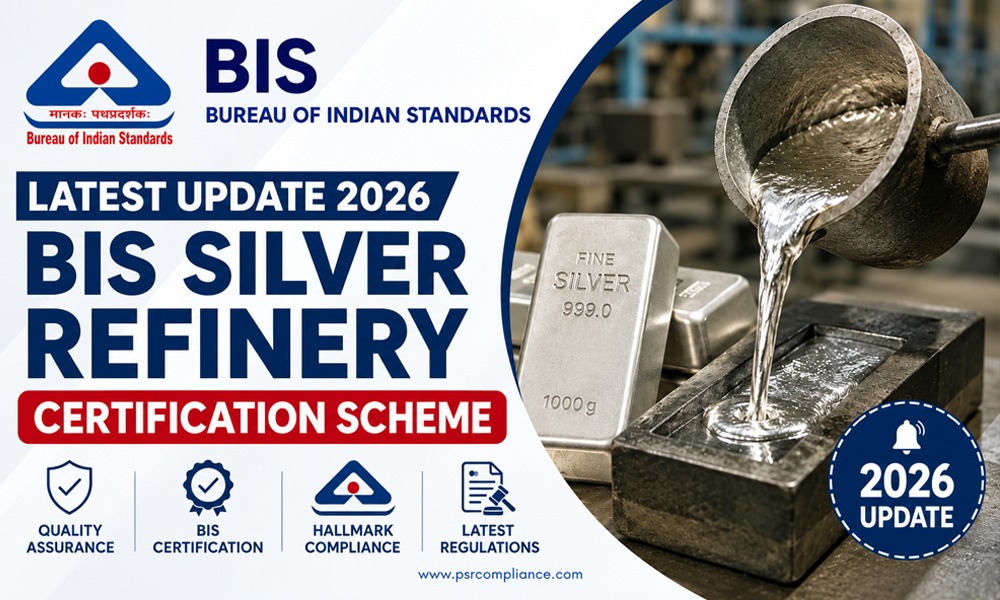
The Bureau of Indian Standards (BIS) has officially prioritized the domestic bullion sector by introducing the Silver Refinery Certification Scheme, that involved critical inputs and efforts by IBJA.
Mirroring the long-established certification ecosystem for gold, this framework introduces a structured “India Good Delivery for Silver” standard specifically tailored for silver bars and coins.
Buyers, institutional investors, and jewelers are guaranteed strict adherence to exact quality, testing, and traceability standards. Silver from any BIS-approved refinery ensures a verified fineness and purity.
Surendra Mehta, National Secretary- IBJA, said:

“BIS is introducing the Silver Refinery Certification Scheme, an initiative that involved critical inputs and efforts by IBJA. Mirroring the long-established certification ecosystem for gold, this framework introduces a structured India Good Delivery for Silver. Now, silver from any BIS-approved refinery ensures a verified fineness and purity. This will gradually end the impure silver bar market.”
Market structures have already evolved alongside this rollout. The Multi Commodity Exchange (MCX) aligned its exchange delivery protocols to accept BIS-standard domestic silver, allowing empanelled Indian refiners to fulfill physical delivery contracts directly on the exchange.
By formalizing the local refining of silver (including silver recovered as a by-product of gold dore), this scheme strengthens the domestic precious metals ecosystem in line with Aatmanirbhar Bharat objectives



BIS Introduces The Silver Refinery Certification Scheme; Framework Introduces “India Good Delivery For Silver”

Navratri Edit By DAIMANTÉ: 9 Pendants, 9 Expressions Of Intention

Reva By PNGS Appoints Sharvari As Its First-Ever Brand Ambassador

Aspect Bullion & Refinery Launches “India’s Biggest Gold Fest” With Zero Making Charges On Gold Coins and Bars

Diamonds Lead The Luxury Wishlist, New Consumer Index Finds

GJEPC, ECGC Programme Underlines Recent Changes In Export Credit Insurance For The GJ Sector.
-
 National News2 hours ago
Aspect Bullion & Refinery Launches “India’s Biggest Gold Fest” With Zero Making Charges On Gold Coins and Bars
-
 National News4 hours ago
Diamonds Lead The Luxury Wishlist, New Consumer Index Finds
-
 National News2 hours ago
GJEPC, ECGC Programme Underlines Recent Changes In Export Credit Insurance For The GJ Sector.
-
 National News27 minutes ago
BIS Introduces The Silver Refinery Certification Scheme; Framework Introduces “India Good Delivery For Silver”