National News
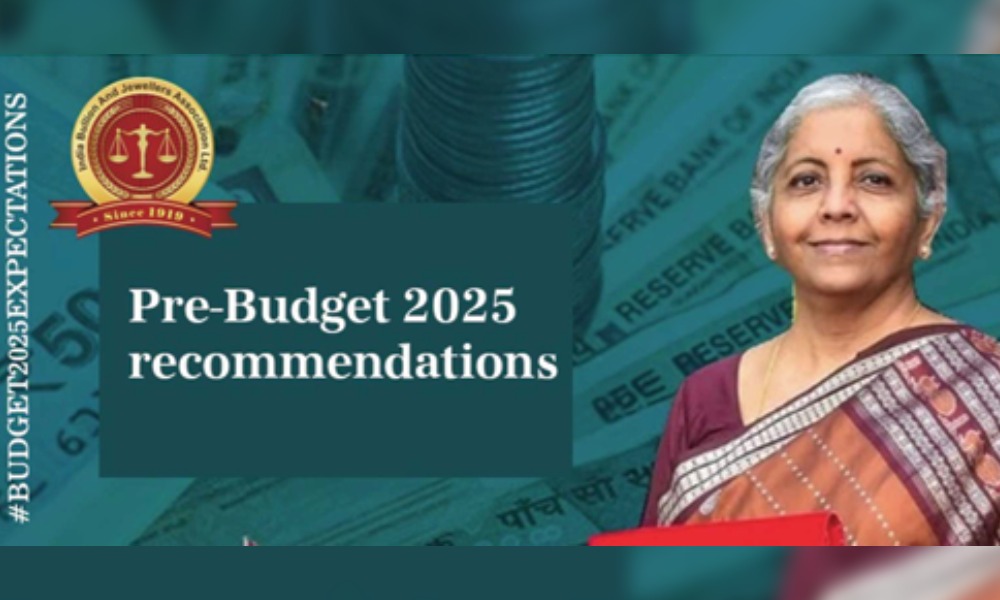
India Bullion and Jewellers Association Ltd. (IBJA) have proposed the following recommendations in Union Budget 2025
Recommendations (Numbered list):
- Reduction in import duty from 8% to 4%.
- Special benefit of 0.5% duty for importing gold through India International Bullion Exchange (IIBX).
- Establishing ‘GST Bonded warehouse’ where duty is to be paid at the time of clearing goods on limit of Custom Bonded warehouse.
- Creation of Electronic Gold Receipt (EGR) through GST Bonded ware-house. This will enable trading on EGR on exchanges.
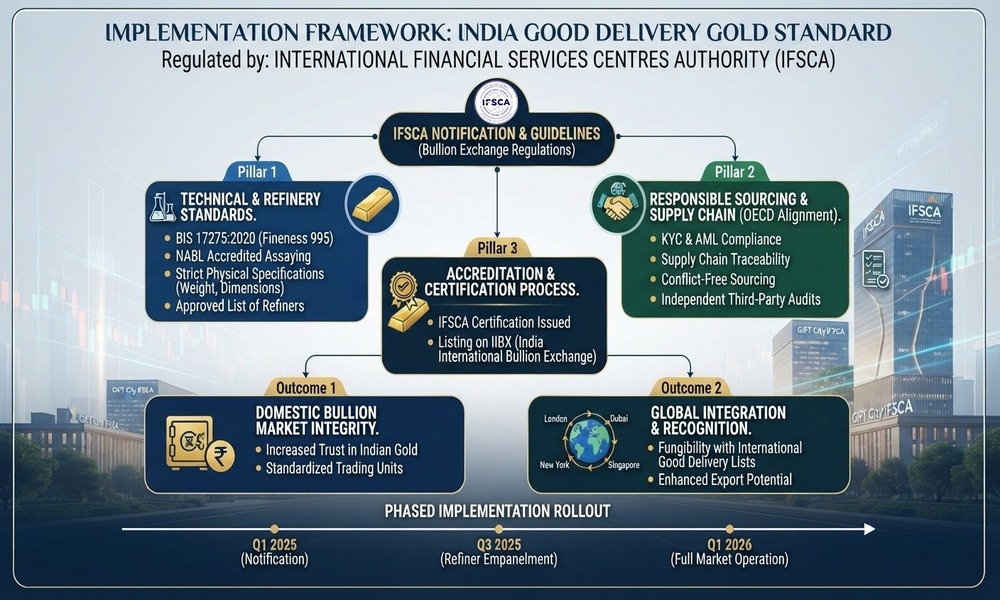
- Allowing all import of gold only through IBDX.
- Allowing bullion export through IBDX.
- Setting up jewellery support centre at GIFT City for domestic traders.
- Mandatory Hallmarking for gold and silver across India for jewellery.
- Stopping import duty benefits from least developed countries (LDC) and Free Trade Area (FTA) countries and restoring the market.
- Gradually moving to 100% bullion trade through commodity exchanges only.
- Removing capital gain tax on gold jewellery and jewellery sales to boost gold monetization and reducing import.

National News
India Gold Conference 2026: India Gold Vision: Recycle, Reform & Re-Innovate
The future of India’s gold market, the conference made clear, will depend not merely on how much gold India owns, but on how efficiently that gold can be recycled, monetised and put to productive use.
The India Gold Conference (IGC) 2026, held in Goa under the theme “India Gold Vision: Recycle, Reform & Re-Innovate,” brought together policymakers, regulators, bullion banks, refiners, exchanges and jewellery-industry leaders to examine how India can build a more efficient, transparent and technology-driven gold ecosystem.
The inaugural session was graced by presence of Guest of Honour Richa Goel Agarwal, Chief General Manager, SEBI along with Sachin Jain, Regional CEO – India, World Gold Council , Prithviraj Kothari, National President, IBJA, Rajesh Rokde, Jignesh Shah, Mentor and Coach, IGM, Chairman-GJC, Samit Guha, MD- & CEO, MMTC-PAMP, Shivanshu Mehta, Head- Bullion and Chief Business Officer- MCX. Representing the organizer Eventell Global Advisory was Srivatsava Ganapathy, Director & CEO.
The panel sessions at India Gold Conference 2026 covered the key structural and strategic priorities shaping India’s gold market. Some of the sessions were: Making GMS Work, Strengthening Trade with Dubai Bullion Market, Exchange-based Spot Trading in Bullion, Meeting All Our Requirements for Jewellery Demand from Buy-Back of Old Gold Jewellery, Import Substitution Opportunities in Gold Investment Demand, and AI Use Cases in the Bullion Business.
A key focus was the future of the Gold Monetisation Scheme (GMS) and its potential to mobilise India’s large above-ground gold holdings, reduce dependence on imports and help contain the current account deficit (CAD).

Making GMS Work
An expert panel agreed that the GMS needs greater participation from the jewellery trade if it is to achieve meaningful scale. The discussion highlighted the role of RBI, SEBI and industry bodies in shaping the modified GMS and stressed the need to make gold deposits more liquid, transferable and commercially useful.
Among the proposals discussed was the possibility of tokenising GMS holdings, allowing investors greater liquidity and transferability. Converting GMS holdings into Electronic Gold Receipts (EGRs) could also enable gold to be used as collateral for borrowing.
However, taxation remains a significant concern for deposit-taking institutions, with the panel noting that uncertainty around tax treatment continues to act as a deterrent to wider participation.
Technology at the Core
The conference placed strong emphasis on technology as an enabler of gold-market reform. In his keynote, Jignesh Shah, Mentor & Coach, India Gold Metaverse, argued that traceability, transparency and trust must be integrated through technology.
He highlighted blockchain, asset fractionalisation and digital platforms as potential tools to broaden retail participation and create new avenues for gold investment, while also envisioning India as a potential leader in gold-backed financial ecosystems.


GoldSense™ Launched
IGM also unveiled GoldSense™, an AI-powered enterprise solution designed for non-destructive gold verification. The portable karatometer is designed to assess gold to depths of up to 7 mm, using AI-driven analysis without damaging the asset or relying on harmful X-ray radiation.
Priced at Rs 5 lakh per unit, the technology is positioned as a tool for more standardised, connected and data-driven gold evaluation.
Building a Spot Gold Market
Another major discussion centred on exchange-based spot trading in bullion. Industry leaders stressed that a liquid spot market is essential to modernise India’s bullion ecosystem, strengthen price discovery and support the country’s growing digital-gold market.
The panel also called for policy changes, particularly addressing double GST taxation and GST offset mechanisms. Collaboration between IBJA and IGM was cited as part of ongoing efforts to strengthen spot-price discovery.


Recycling Gold to Meet Demand
The conference also examined the potential of old-gold buybacks to meet a greater share of India’s jewellery demand without relying entirely on fresh imports. Gold recycling was positioned as a critical component of India’s long-term strategy to improve supply security and reduce import dependence.
Sessions additionally explored gold leasing, import substitution in investment demand, electronic gold receipts, Dubai bullion-market linkages and AI applications in bullion businesses.

The Bigger Picture
The discussions at IGC 2026 underscored a broader shift in India’s gold policy—from simply managing imports towards building a formal, liquid, technology-enabled and recyclable gold ecosystem.
For the GMS to fulfil its original promise, however, the message from the conference was clear: participation must extend beyond banks to jewellers and consumers, while liquidity, taxation, transferability and technology must be addressed together.
If these structural barriers are resolved, monetising India’s existing gold stock could become an important source of domestic supply, reduce reliance on imports and contribute to a more efficient gold market—and potentially help moderate the country’s CAD.
The future of India’s gold market, the conference made clear, will depend not merely on how much gold India owns, but on how efficiently that gold can be recycled, monetised and put to productive use.
-
New Premises1 week agoAevum – A New Chapter Of Diamond & Platinum Jewellery Has Begun In Rajkot and Morbi
-
International News1 week agoGeorgina Rodríguez’s $55 Million Diamond Moment at Her Wedding to Cristiano Ronaldo
-
National News8 hours agoIndia Gold Conference 2026: India Gold Vision: Recycle, Reform & Re-Innovate
-
International News10 hours agoVO Vintage Returns To Vicenza With Prestigious Jewellery, Watches and Collecting Culture