National News
High Gold Prices, Geopolitical Tensions, PM Call For Economic Austerity Drives Indian Consumers To Silver
Silver Is Migrating From A Niche Industrial Commodity and Traditional Silverware Into Mainstream, High-End Jewellery

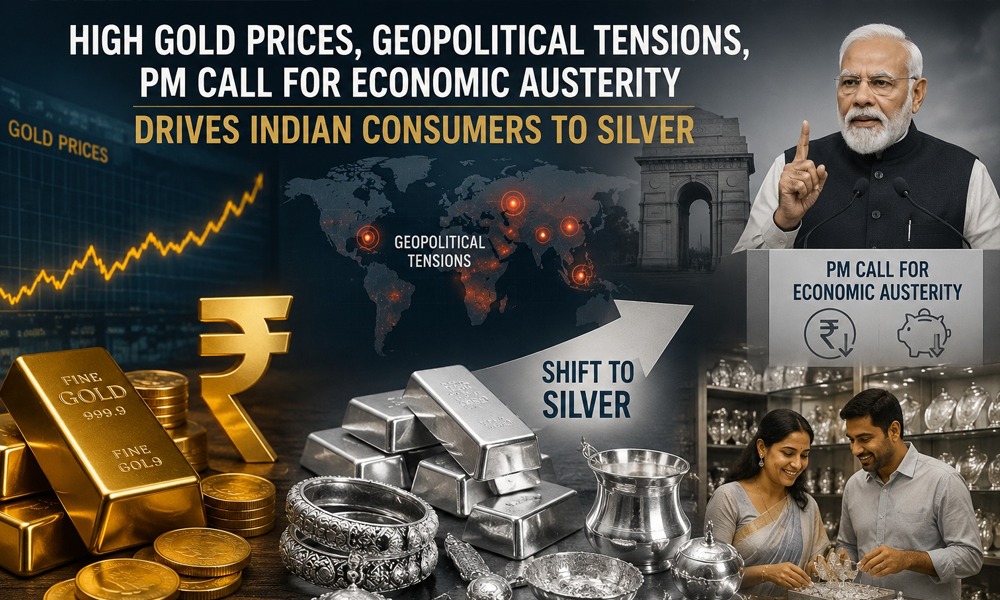
India’s historic love affair with gold is facing a structural test. A potent combination of record-high prices, escalating geopolitical tensions in West Asia, and a direct appeal for economic austerity from New Delhi is forcing a pivot in the world’s second-largest consumer market for the precious metal. The alternative? Silver.
The shift comes on the heels of a rare intervention by Prime Minister Narendra Modi, who recently urged citizens to pause gold purchases for a year. The goal is macroeconomic stabilization: curbing a massive import bill to defend the nation’s foreign exchange reserves against a rising tide of global volatility.
The numbers underscore the government’s anxiety. India imported nearly $72 billion worth of gold in the 2026 fiscal year, positioning the metal as the country’s largest import liability after crude oil. The pressure has only intensified in recent months, with data showing a staggering $32.7 billion drained for gold imports between late February and early May.
For generationally minded Indian consumers, who view precious metals not just as adornment but as vital financial security during weddings and festivals, walking away from the bullion market entirely is rarely an option. Instead, the middle class is recalibrating.
Industry executives note that gold is rapidly outpricing everyday buyers. As a result, silver is migrating from a niche industrial commodity and traditional silverware into mainstream, high-end jewelry. Market insiders report that consumers are increasingly treating the white metal as an affordable proxy, capitalizing on its lower entry point while retaining the psychological comfort of holding physical bullion.
The metal is seeing a dual demand shock. While retail consumers chase it for affordability, global macro factors—including robust industrial applications and anticipation of Western central bank interest rate cuts—are providing a sturdy floor for silver prices.
To mitigate the drop-off in fresh retail volume, the domestic jewelry sector is aggressively shifting its strategy toward a circular economy. Retailers are launching campaigns to encourage consumers to recycle and exchange their existing family heirlooms rather than buying newly
Whether Indian households will willingly unlock their private vaults remains to be seen. However, as long as global headwinds persist and New Delhi keeps the pressure on imports, the glitter of India’s jewelry markets will look increasingly silver.


National News
IFSCA Notifies India Good Delivery Gold Framework
GJEPC Seeks Swift Rollout and Global Recognition. The Framework Is Expected To Strengthen Responsible Sourcing, Build Confidence In Indian-Refined Gold and Create Opportunities For Bullion Exports.
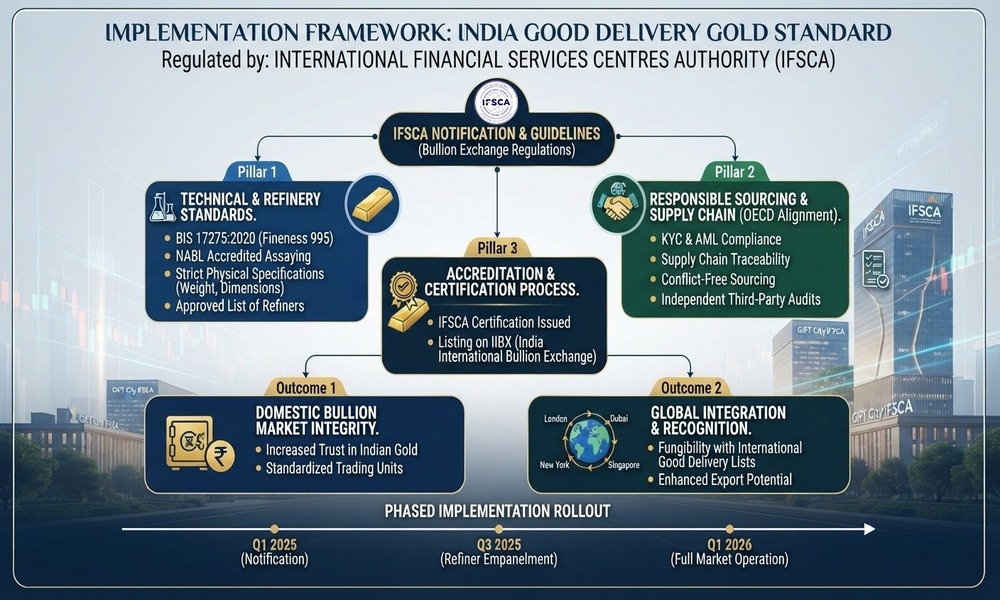
GJEPC has urged the Government to expedite international recognition and the implementation of the India Good Delivery Gold framework, following the notification of the International Financial Services Centres Authority (IFSCA) (Good Delivery) Guidelines, 2026. The framework is expected to strengthen responsible sourcing, build confidence in Indian-refined gold and create opportunities for bullion exports.
The guidelines establish a framework for quality assurance, responsible sourcing and traceability in gold refining. IFSCA, India’s unified regulator for financial products, services and institutions operating in International Financial Services Centres, will implement the framework through the Bullion Exchange in the IFSC. Gold from accredited refiners that meets the prescribed requirements can qualify for delivery on IFSC exchanges and for over-the-counter trading.
The framework extends beyond the purity and quality of gold bars to address their provenance. Refiners must trace raw gold to its source, assess supply-chain risks, verify suppliers and beneficial owners, and meet applicable responsible-sourcing requirements. Independent third-party audits will provide additional assurance.
The initiative follows the recommendations by NITI Aayog, a policy think tank, which had called for an India Good Delivery Standard and responsible-sourcing guidelines for refineries. The report highlighted the potential of domestic refining to retain more value within India, generate employment and support exports.


-

 TechBuzz5 hours ago
K. Srinivasan Unveils Doit Coimbatore Experience Centre
-

 GlamBuzz5 hours ago
Kalyan Jewellers’ Navratri Celebrations Bring Stars From All Industries To Thrissur
-
 National News4 hours ago
IFSCA Notifies India Good Delivery Gold Framework
-

 National News5 hours ago
World Gold Council Unveils Immersive Gold Experience At Phoenix Palladium, Lower Parel, Mumbai