National News
Gold, silver prices on MCX see minor pullback

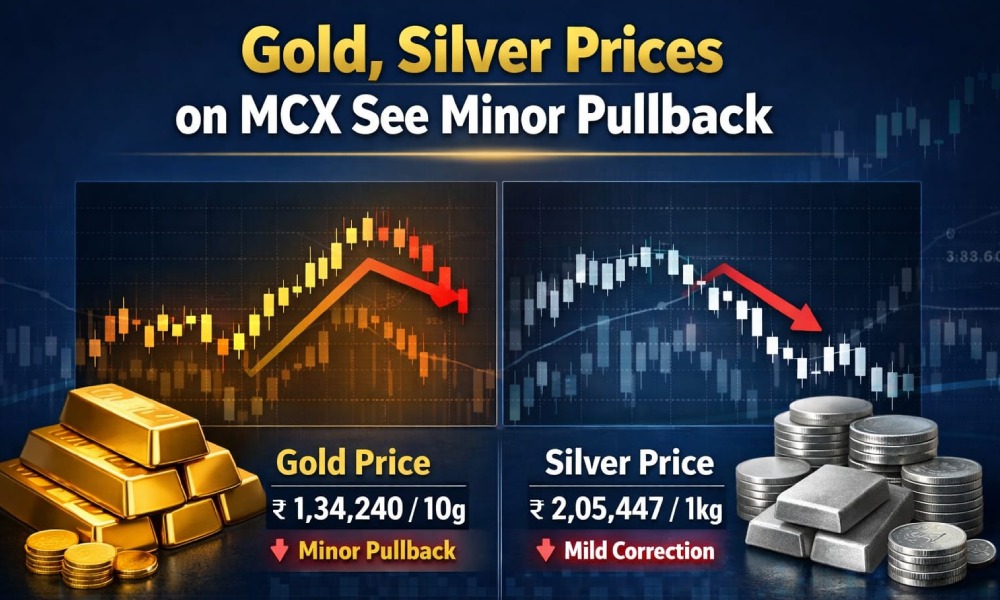
Gold and silver prices on the Multi Commodity Exchange (MCX) experienced a minor pullback today, reflecting investor caution amid global economic signals. Lower-than-expected US inflation data has influenced gold’s safe-haven appeal, while a strengthening dollar reduces the attractiveness of precious metals.
MCX gold February contracts traded lower around Rs 1,34,619 per 10 grams, Silver March contracts fell 0.47% to Rs 2,06,451 per kg, amid profit booking after prior gains. Spot prices showed similar trends, with 24K gold at approximately Rs 1,33,770-1,34,480 per 10 grams and silver at Rs 2,09,000 per kg.
The current price correction in precious metals can be traced to two interconnected developments in the global financial landscape:
US Inflation Data Impact: Recent inflation figures from the United States came in below market expectations, creating a nuanced scenario for gold prices. While lower inflation typically supports economic stability, it has paradoxically diminished gold’s appeal as a safe-haven asset in the immediate term. The data suggests that inflationary pressures may be moderating faster than anticipated, reducing the urgency for investors to seek protection in traditional hedges against rising prices.
Dollar Strength: The US dollar has strengthened against a basket of global currencies, creating headwinds for dollar-denominated commodities like gold and silver. A robust dollar makes precious metals more expensive for holders of other currencies, thereby dampening international demand and exerting downward pressure on prices. This inverse relationship between the dollar and precious metals continues to be a dominant force in current market dynamics.
The modest nature of today’s decline suggests that investors are adopting a wait-and-watch approach rather than engaging in aggressive selling. The profit-booking in silver, following recent gains, indicates that market participants are locking in returns while reassessing the near-term outlook for precious metals. This cautious positioning reflects the broader uncertainty surrounding monetary policy directions, geopolitical developments, and economic growth trajectories across major economies.
As markets navigate this period of recalibration, attention will remain focused on upcoming economic data releases, central bank communications, and dollar movements. While the current pullback represents a pause in the precious metals rally, the fundamental drivers of long-term demand—including economic uncertainty, inflation concerns, and portfolio diversification needs—remain intact. Traders and investors would be well-advised to monitor these evolving conditions closely as they position themselves for the year ahead.



– Kirit Bhansali, Chairman, GJEPC

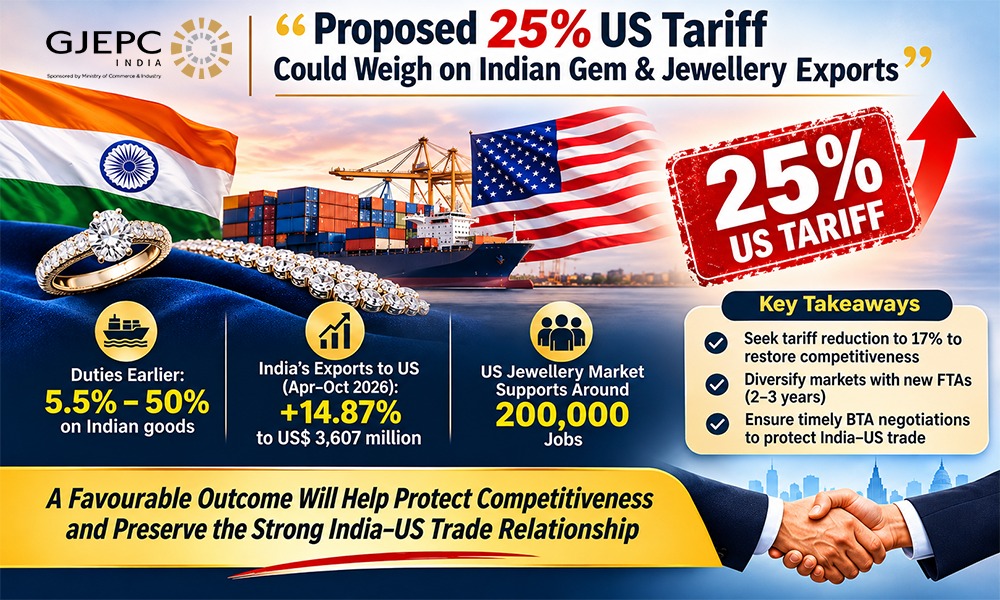
“India’s gem and jewellery sector has faced prolonged uncertainty from US tariff measures, with duties ranging from 5.5% to 50%, straining exports, payment cycles and logistics costs. Tariffs raise landed costs and retail prices, potentially dampening US consumer demand and affecting jobs and businesses across the value chain in both countries. The US remains a major jewellery market, supporting roughly 200,000 jobs.
Although the situation had begun to improve—with India’s gem and jewellery exports to the US growing 14.87% to US$3,607 million during April–October 2026 year-on-year—the proposed 25% US tariff on Indian goods could again weigh on the sector. Any increase in tariffs, or continued uncertainty over market access, would affect the competitiveness of Indian exports, disrupt order flows and compress exporters’ margins in this key market.
The industry is hopeful that the agreement will provide meaningful relief by reducing the tariff to 17%, restoring price competitiveness and creating a more favourable environment for exporters to sustain and grow their business in the US market.
While India’s new FTAs will help diversify export markets over time, building alternative buyer relationships could take two to three years, whereas the impact of proposed tariffs could be felt within 45 days to two months. Higher proposed tariffs on competitors such as Thailand, Vietnam and China may offer Indian exporters a relative advantage, though the benefit will depend on the final tariff structure. The industry remains resilient and hopeful that timely BTA negotiations will secure a favourable outcome, protect competitiveness and preserve the strong India–US trade relationship.”



The Architecture of Desire: Why True Luxury Lives In The Felt Experience By Dr. C. Vinod Hayagriv MD- C. Krishniah Chetty Group of Jewellers

GJEPC Quote On Proposed 25% Tariff By US

Make A Statement This Black Friday With Palmonas’ Top Jewellery Picks

5 Solitaire Mangalsutra Designs By Divine Solitaires For Every Style and Occasion
GJEPC Quote On Proposed 25% Tariff By US
The Architecture of Desire: Why True Luxury Lives In The Felt Experience By Dr. C. Vinod Hayagriv MD- C. Krishniah Chetty Group of Jewellers
-
 National News8 hours ago
5 Solitaire Mangalsutra Designs By Divine Solitaires For Every Style and Occasion
-
 National News6 hours ago
GJEPC Quote On Proposed 25% Tariff By US
-
 By Invitation5 hours ago
The Architecture of Desire: Why True Luxury Lives In The Felt Experience By Dr. C. Vinod Hayagriv MD- C. Krishniah Chetty Group of Jewellers
-
 National News7 hours ago
Make A Statement This Black Friday With Palmonas’ Top Jewellery Picks