

International News
Gold reclaims $5150,Silver above $85 on mounting tariffs and geopolitical uncertainity AUGMONT BULLION REPORT


Gold and silver have posted strong rebounds in recent sessions, with gold up about 4% and silver outperforming near 10%, driven primarily by heightened safe-haven demand amid macro and geopolitical uncertainty. The rebound reflects investor flows back into bullion as risk assets falter and uncertainties mount around economic growth, trade policy, and geopolitical risk.
Weaker U.S. GDP and macro cues
U.S. economic data showed slower-than-expected Q4 GDP growth at around 1.4% annualised, well below forecasts, signaling that the economic expansion has lost momentum. At the same time, inflation readings continue to show persistence, leaving policymakers in a data-dependent stance. The weaker growth outlook supports expectations for future Federal Reserve rate cuts, which is constructive for gold and silver prices as lower rates tend to reduce real yields and support non-yielding assets.
Tariff uncertainty and trade policy risks
A landmark U.S. Supreme Court ruling struck down sweeping tariff powers previously wielded by the president, creating uncertainty around global trade policy. Although an alternative tariff was announced by Trump on the same day, ambiguity and potential disruption to existing trade deals have unnerved markets. The resulting dollar softness makes precious metals cheaper for foreign buyers and reinforces safe-haven flows.
Geopolitical risk premium remains elevated
Growing tensions between the U.S. and Iran, including warnings from President Donald Trump over nuclear talks and possible military action, have reintroduced a geopolitical risk premium into markets. Such risk-off dynamics tend to amplify silver’s volatility alongside gold’s safe-haven appeal.
Dollar and rate expectations
The dollar’s recent weakness, partly due to trade and growth uncertainties, has boosted bullion appeal. Traders still see potential for rate cuts later in the year as growth softens while inflation gradually eases, a combination that typically favours precious metals.
The recent rebound in gold and silver prices is driven by a mix of macro slowdowns, tariff uncertainty, and renewed geopolitical risks, rather than a pure technical reversal. These factors are supportive of safe-haven demand in the near to medium term. Investors should watch additional U.S. economic prints, Fed policy messaging, and geopolitical developments closely, as these will influence the durability of the current precious metals uptrend.
Gold has delivered a decisive breakout, sustaining above the key psychological level of $5,000 and moving past its earlier consolidation ceiling near $5,130. This technical breakout indicates renewed bullish momentum, with prices now likely targeting the next resistance zones at $5,300 (approximately Rs.1,63,000) and $5,400 (approximately Rs.1,66,000). The move suggests fresh buying interest rather than short covering, keeping the near-term bias positive.
In contrast, silver continues to trade within a consolidation range. Prices are gradually approaching the resistance level around $92 (approximately Rs.2,80,000). Unless a strong breakout occurs above this zone, silver may remain range-bound with intermittent volatility.
Given the current setup, a disciplined buy-on-dips and sell-on-rallies strategy remains advisable, particularly in silver, while gold maintains a stronger upward momentum bias.


International News
Swiss International Gemlab Launches with Proprietary AI for Precise Colored Gemstone Grading
Swiss International Gemlab promises Faster, More Accurate Certification, Ensures Report Consistency

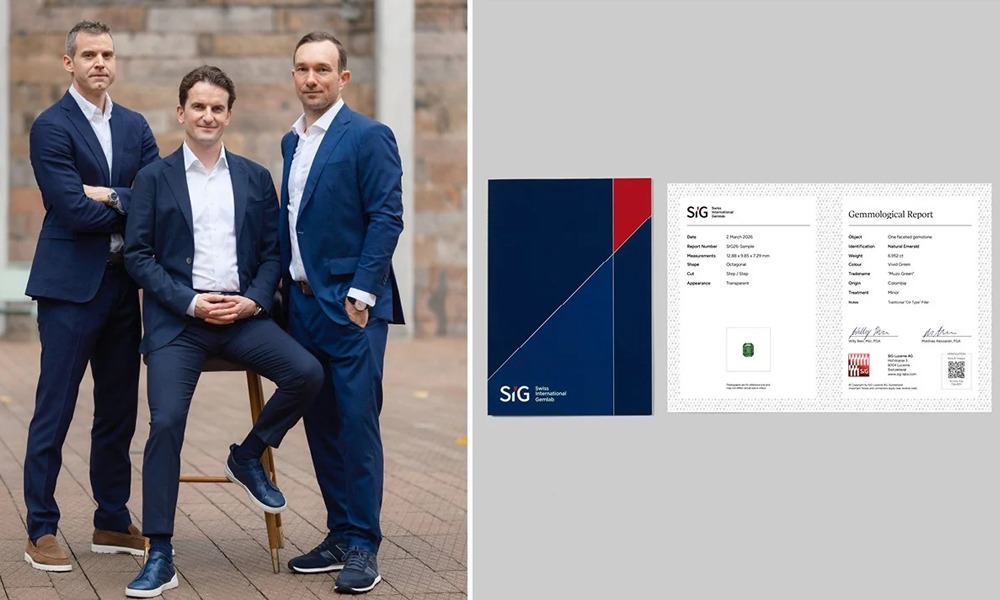
Three veteran gemologists today announced the opening of Swiss International Gemlab (SIG), a cutting-edge facility leveraging proprietary artificial intelligence (AI) to enhance grading accuracy and consistency for colored gemstones.
Founded by Willy Bieri, Lawrence Hahn, and Matthias Alessandri—senior experts who have collaborated for over a decade—SIG will operate from state-of-the-art locations in Lucerne, Switzerland, and Hong Kong. The lab promises faster results, unmatched transparency, and scientific rigor, insulated from external influences.
SIG delivers a full spectrum of services, including gemstone identification, origin determination, treatment analysis, and advanced color grading. At its core is SIG-AI Assistance, a proprietary system that cross-references analytical data against structured databases to detect anomalies, ensure report consistency, and slash interpretation time.
With a standard turnaround of five business days—plus expedited options for urgent needs—and real-time status tracking, SIG sets a new benchmark for efficiency and reliability in gem certification. The lab will make its global debut at this year’s GemGenève in May, offering on-site services to industry professionals.



Alrosa Plans To Expand Diamond Production Through Severalmaz

KISNA Diamond and Gold Jewellery Unveils Akshaya Tritiya Campaign- Khushiyon Mein Nivesh

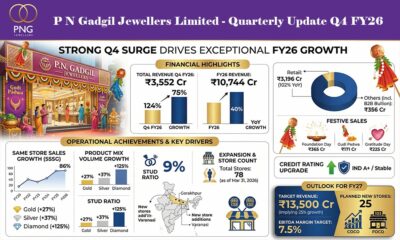
P N Gadgil Jewellers Limited – Quarterly Update Q4 FY26

Precious Metals Rally On US-Iran Ceasefire: Gold Tops $4,850, Silver Jumps To $76
Alrosa Plans To Expand Diamond Production Through Severalmaz
KISNA Diamond and Gold Jewellery Unveils Akshaya Tritiya Campaign- Khushiyon Mein Nivesh
-
 International News2 days ago
Precious Metals Rally On US-Iran Ceasefire: Gold Tops $4,850, Silver Jumps To $76
-
 DiamondBuzz7 minutes ago
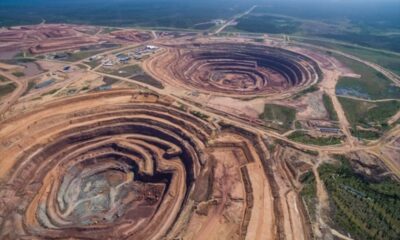
Alrosa Plans To Expand Diamond Production Through Severalmaz
-
 BrandBuzz15 hours ago
KISNA Diamond and Gold Jewellery Unveils Akshaya Tritiya Campaign- Khushiyon Mein Nivesh
-
 National News1 day ago
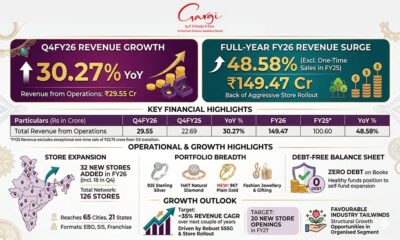
Gargi by P. N. Gadgil & Sons Posts 30.27% Revenue Growth in Q4FY26
