National News
GJSCI Signs MoU with APSSDC in Andhra Pradesh

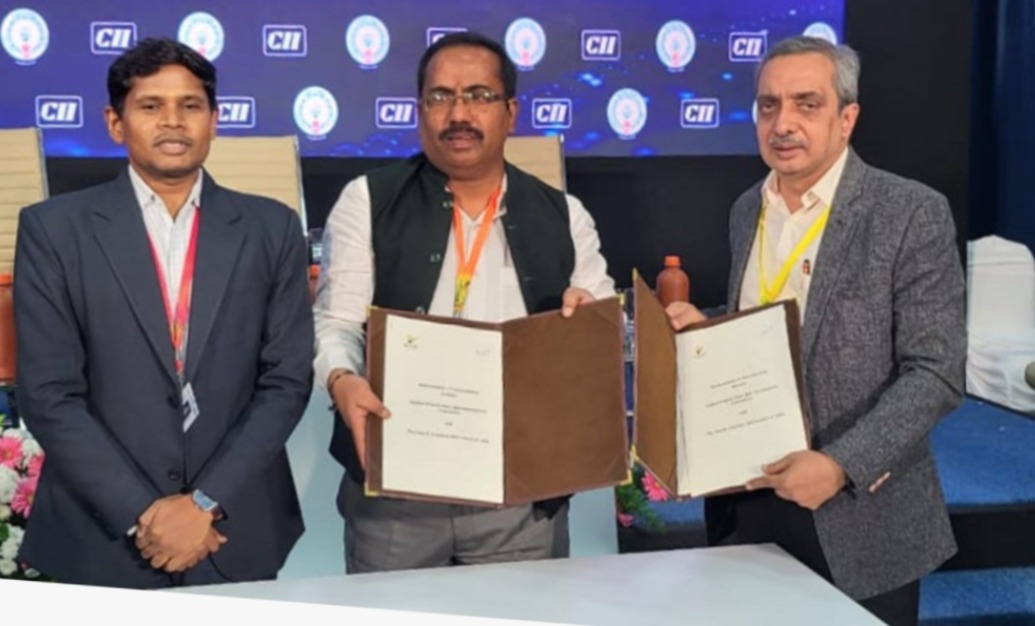
The Gem & Jewellery Skill Council of India (GJSCI) has signed a Memorandum of Understanding (MoU) with the Andhra Pradesh State Skill Development Corporation (APSSDC) to implement skill training programmes.
The collaboration will encompass Short-Term Training programs, upskilling modules, and Recognition of Prior Learning assessments, designed to enhance talent development in the gems and jewellery sector. Through these structured interventions, the partnership aims to equip youth and existing workers and artisans with industry-relevant competencies, expand employment opportunities, and also focus on women’s empowerment by working with SHG members.
The MoU was formally exchanged in Visakhapatnam on 14 November 2025. G. Ganesh Kumar, IAS, Managing Director & CEO, APSSDC, and Rajeev Garg, Executive Director & CEO, GJSCI, represented their respective organisations during the ceremony. The partnership reinforces a shared commitment to promoting high-quality skill development, enhancing the state’s skill ecosystem, and supporting economic growth through specialised training and skill upgradation initiatives.
Andhra Pradesh has a long tradition of both gold jewellery and imitation jewellery manufacturing and retail. Districts like Mangalagiri have an old gold jewellery cluster, and the present Government is working towards establishing a jewellery park there.



– Kirit Bhansali, Chairman, GJEPC

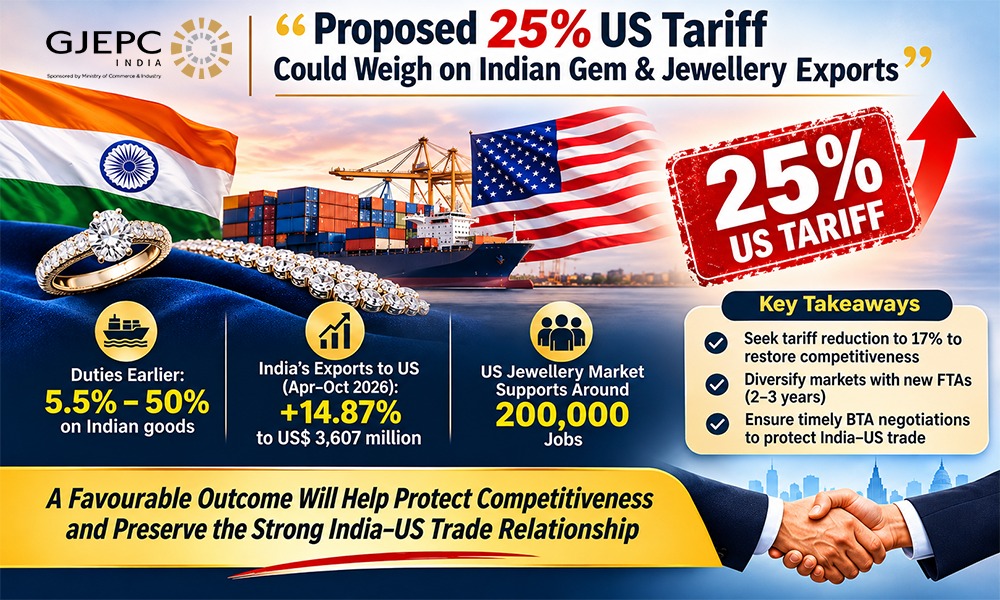
“India’s gem and jewellery sector has faced prolonged uncertainty from US tariff measures, with duties ranging from 5.5% to 50%, straining exports, payment cycles and logistics costs. Tariffs raise landed costs and retail prices, potentially dampening US consumer demand and affecting jobs and businesses across the value chain in both countries. The US remains a major jewellery market, supporting roughly 200,000 jobs.
Although the situation had begun to improve—with India’s gem and jewellery exports to the US growing 14.87% to US$3,607 million during April–October 2026 year-on-year—the proposed 25% US tariff on Indian goods could again weigh on the sector. Any increase in tariffs, or continued uncertainty over market access, would affect the competitiveness of Indian exports, disrupt order flows and compress exporters’ margins in this key market.
The industry is hopeful that the agreement will provide meaningful relief by reducing the tariff to 17%, restoring price competitiveness and creating a more favourable environment for exporters to sustain and grow their business in the US market.
While India’s new FTAs will help diversify export markets over time, building alternative buyer relationships could take two to three years, whereas the impact of proposed tariffs could be felt within 45 days to two months. Higher proposed tariffs on competitors such as Thailand, Vietnam and China may offer Indian exporters a relative advantage, though the benefit will depend on the final tariff structure. The industry remains resilient and hopeful that timely BTA negotiations will secure a favourable outcome, protect competitiveness and preserve the strong India–US trade relationship.”



The Architecture of Desire: Why True Luxury Lives In The Felt Experience By Dr. C. Vinod Hayagriv MD- C. Krishniah Chetty Group of Jewellers

GJEPC Quote On Proposed 25% Tariff By US

Make A Statement This Black Friday With Palmonas’ Top Jewellery Picks

5 Solitaire Mangalsutra Designs By Divine Solitaires For Every Style and Occasion
GJEPC Quote On Proposed 25% Tariff By US
The Architecture of Desire: Why True Luxury Lives In The Felt Experience By Dr. C. Vinod Hayagriv MD- C. Krishniah Chetty Group of Jewellers
-
 National News7 hours ago
5 Solitaire Mangalsutra Designs By Divine Solitaires For Every Style and Occasion
-
 National News5 hours ago
GJEPC Quote On Proposed 25% Tariff By US
-
 By Invitation3 hours ago
The Architecture of Desire: Why True Luxury Lives In The Felt Experience By Dr. C. Vinod Hayagriv MD- C. Krishniah Chetty Group of Jewellers
-
 National News6 hours ago
Make A Statement This Black Friday With Palmonas’ Top Jewellery Picks