National News
GJEPC Reaffirms India’s Commitment to Natural Diamond Promotion at Luanda Accord 3.0 Ministerial Meeting
GJEPC has contributed over US$16 million towards generic natural diamond promotion over the past decade

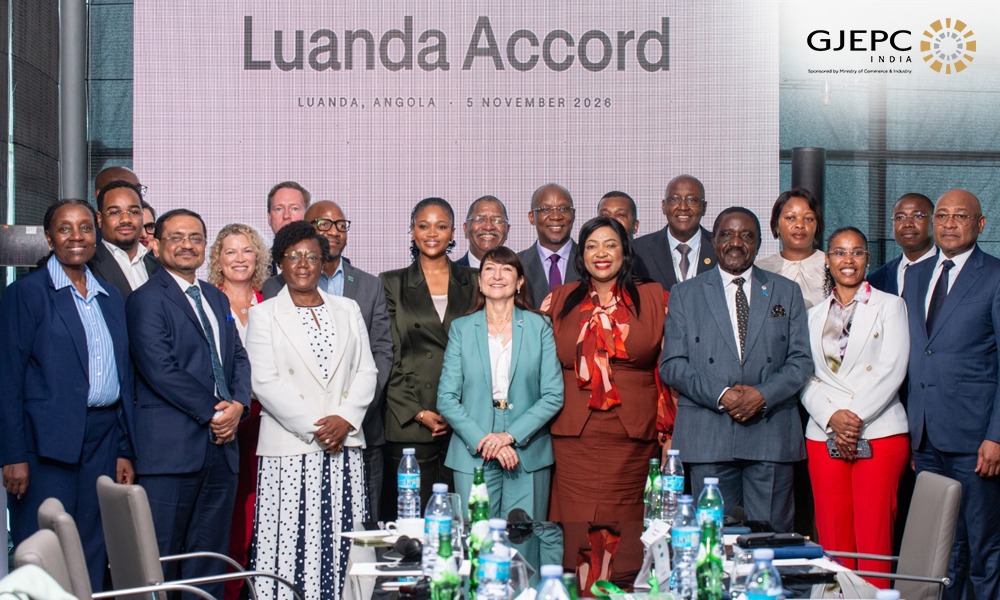
The Gem & Jewellery Export Promotion Council (GJEPC) highlighted India’s commitment to the global promotion of natural diamonds at the Luanda Accord 3.0 Ministerial Meeting, held in Luanda, Angola, on 5 November 2026, following close on the heels of the African Diamond Producers Association’s (ADPA) 20th anniversary celebrations. The meeting brought together stakeholders of the international diamond industry to discuss collective marketing, consumer confidence and strategies to build long-term demand for natural diamonds.
GJEPC is an established member of The Diamond Collective and the first non-mining industry body to join the Luanda Accord. Its participation brings the perspectives of India’s manufacturing, trading and retail sectors to global efforts to promote natural diamonds.
Kirit Bhansali, Chairman, GJEPC, said:

“Natural diamonds represent a global industry built on the partnership between producing nations, manufacturing centres and consumer markets. India has an important role in this value chain, and GJEPC remains committed to working with international industry partners to strengthen consumer confidence and build demand for natural diamonds.
GJEPC’s contribution of over US$16 million towards various generic diamond promotion efforts over the past decade reflects this long-standing commitment. The Luanda Accord provides an important platform for the industry to work together on common priorities and communicate the enduring value of natural diamonds to consumers worldwide.”
The Diamond Collective reviewed its 2026 performance, and highlighted efforts focused on increasing the visibility of natural diamonds, strengthening their cultural relevance and building consumer interest across key markets.
Sandrine Conseiller, Chair of The Diamond Collective, emphasised the need for coordinated, long-term marketing and communication efforts to rebuild consumer demand for natural diamonds. She noted that the industry had built the natural diamond jewellery market into an approximately US$80 billion category through collective marketing initiatives that began in the 1940s. However, the withdrawal of these efforts since 2010 had contributed to declining consumer demand.
She identified changing preferences among Millennials and Gen Z, the growing commoditisation of diamonds through online retail, competition from other luxury categories and the narrative surrounding lab-grown diamonds as key challenges facing the industry. While natural diamonds retain strong aspirational appeal, she stressed the need to bridge the gap between consumer aspiration and actual purchasing decisions through greater visibility, storytelling and sustained marketing.

Conseiller also outlined the evolution of the Diamond Council into The Diamond Collective following the Luanda Accord, with new board representation from Angola and India, including GJEPC, and the appointment of Amber Pepper as CEO. The organisation’s work is guided by three priorities: “Desire, Differentiate and Defend”, aimed at rebuilding consumer interest, communicating the distinctive cultural and emotional value of natural diamonds, and strengthening their identity and position in the market.
Addressing the meeting in Luanda, Sabyasachi Ray, Executive Director, GJEPC, noted:
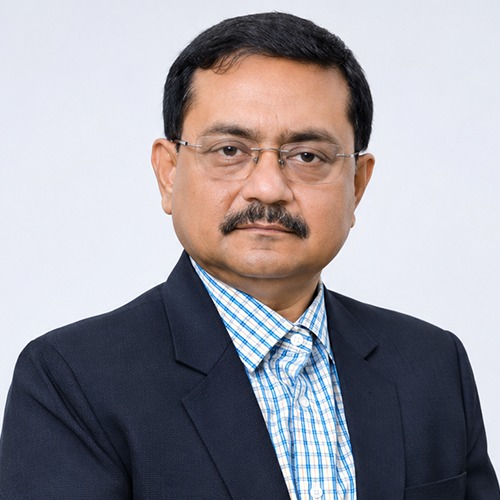
“India brings a distinctive perspective to global natural diamond advocacy, combining its position as a leading manufacturing centre with a substantial and growing jewellery market. Through our participation in The Diamond Collective, GJEPC will continue to contribute to collective marketing efforts, retailer education and consumer awareness.
We also see considerable scope for collaboration between African producing nations and India’s manufacturing and retail sectors. Consistent terminology, informed consumer communication and stronger industry partnerships will be important in building confidence and sustaining demand for natural diamonds.”
GJEPC’s contribution to these objectives builds on its long-standing commitment to generic natural diamond promotion. Over the past decade, the Council has contributed more than US$16 million towards generic diamond promotion, supporting efforts to sustain consumer interest and strengthen demand for natural diamonds across markets. Its ongoing contribution also includes promoting consistent terminology in line with India’s IS 19469:2025 standard, supporting retailer education and consumer awareness through initiatives such as the INDRA programme jointly with De Beers, and bringing India’s market perspective to international natural diamond advocacy.
India represents an important growth market for natural diamond jewellery, currently estimated at US$10 billion, with projections indicating potential growth to US$20 billion by 2030. Its established manufacturing capabilities, extensive retail network and growing consumer base provide significant opportunities for the international natural diamond industry.





National News
Augmont-NSE Partnership Drives Strong Start for India’s Gold EGR Market, with Over 1,60,357 Units Traded in First Few Hours
Electronic Gold Receipts segment witnesses active two-way trading on day one, with 1,60,375 units traded, representing approximately 6 kg of gold and a traded value of ₹23.34 crore as of 04:25 PM
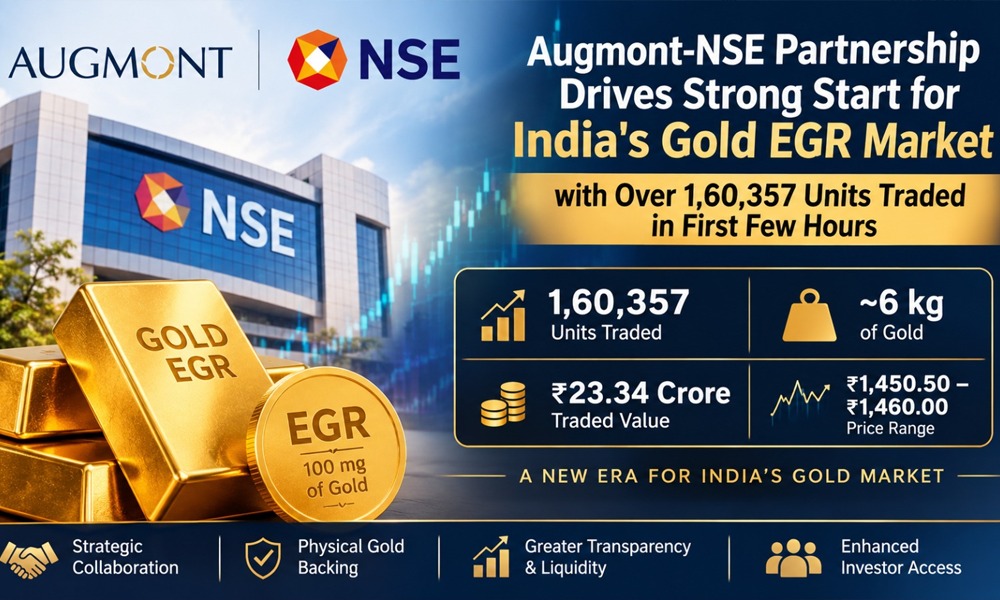
India’s gold market took an important step towards greater integration with the commencement of live trading in the Electronic Gold Receipts (EGR) segment on the National Stock Exchange of India (NSE) today. Enabled through the collaboration between NSE and Augmont Enterprises Limited, the launch brings together NSE’s regulated exchange infrastructure and Augmont’s integrated physical gold ecosystem, creating a new avenue for investors to trade physically backed gold.
On its opening day, the EGR segment witnessed active two-way trading, with 1,60,357 units traded by approximately 04:25 PM, representing around 6 kg of gold. The trading activity translated into a cumulative traded value of approximately Rs.23.34 crore during the first session. The segment also demonstrated orderly price discovery, with prices remaining within a narrow intraday range of Rs.1,450.50 to Rs.1,460.00. The bid-ask spread remained between Rs.0.50 and Rs.1.00, indicating continuous two-way quotations and an active order book.
Each EGR represents 100 mg of physical gold, with the underlying gold held in SEBI-regulated vaults. Investors can buy and sell EGRs through their demat accounts on the exchange, while retaining the option of converting their holdings into physical gold, subject to the applicable framework. The segment follows a T+1 settlement cycle, under which trades executed on a particular day are settled on the next business day, facilitating the transfer of securities and funds through the exchange’s regulated clearing and settlement mechanism.
Under the strategic collaboration, Augmont serves as a key physical gold and infrastructure partner for NSE’s EGR segment, supporting the creation, vaulting, redemption and liquidity ecosystem. The gold backing the EGRs is sourced through Augmont’s integrated refining infrastructure, bringing together physical gold processing and exchange-based trading within a regulated framework.
The commencement of live trading marks an important step towards building a more transparent and accessible gold market in India. By enabling standardised gold to be traded through an exchange-based mechanism, EGRs have the potential to strengthen price discovery, improve market participation and create a more integrated ecosystem for physical gold.
Ketan Kothari, Whole-time Director, Augmont Enterprises Limited, said:

“The commencement of EGR trading marks the transition of our collaboration with NSE from building the underlying infrastructure to enabling a live, exchange-traded gold market. The day-one trading activity, continuous two-way quotations and orderly price discovery are important initial milestones for a new market segment.
At Augmont, we have brought together our refining capabilities and physical gold infrastructure to support the creation, vaulting and redemption of EGRs. We believe this initiative can play an important role in making physical gold more accessible, transparent and integrated with India’s formal financial ecosystem. Our focus remains on strengthening the ecosystem and supporting its wider adoption among investors, brokers and other market participants.”



Augmont-NSE Partnership Drives Strong Start for India’s Gold EGR Market, with Over 1,60,357 Units Traded in First Few Hours

GJEPC Reaffirms India’s Commitment to Natural Diamond Promotion at Luanda Accord 3.0 Ministerial Meeting

Shankesh Jewellers Revenue Grew 52% y-o-y To Rs 980 Cr in H1FY27, EBITDA Surged 51% y-o-y to Rs 98Cr
GJEPC Reaffirms India’s Commitment to Natural Diamond Promotion at Luanda Accord 3.0 Ministerial Meeting
Shankesh Jewellers Revenue Grew 52% y-o-y To Rs 980 Cr in H1FY27, EBITDA Surged 51% y-o-y to Rs 98Cr
Augmont-NSE Partnership Drives Strong Start for India’s Gold EGR Market, with Over 1,60,357 Units Traded in First Few Hours
-

 JB Insights2 weeks ago
Dhanteras Shopping Guide 2026:Gold, Silver, Diamonds & Festive Jewellery Trends To Watch
-
 National News2 weeks ago
Indriya, Aditya Birla Jewellery Unveiled India’s Largest Sustainable Jewellery Rangavalli
-

 JB Insights2 weeks ago
Dhanteras 2026: Can Festive Shopping Spark A Golden Opportunity For india’s Jewellery Industry?
-
 National News3 hours ago
Shankesh Jewellers Revenue Grew 52% y-o-y To Rs 980 Cr in H1FY27, EBITDA Surged 51% y-o-y to Rs 98Cr