
International News
Clothing and jewellery top list of gifts US shoppers have purchased in Christmas season

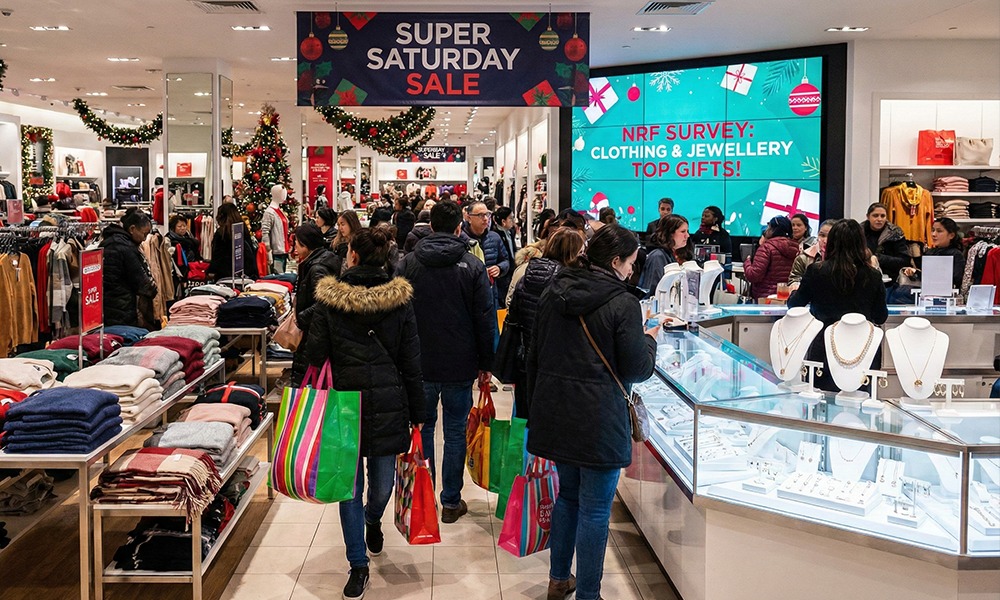
Every year, the Saturday just before Christmas turns into a shopping frenzy called Super Saturday. This year, it falls five days before December 25, and experts predict it will be bigger than ever. According to the National Retail Federation (NRF), about 158.9 million Americans plan to shop on this day. That’s 1.7 million more shoppers than in 2024 and even beats the old record of 158.5 million from 2022. The NRF learned this from a survey they did with Prosper Insights & Analytics, asking thousands of people about their holiday plans.
What are people buying? Clothing, accessories, and jewelry top the list—48% of shoppers picked these so far. Toys came next at 30%, and gift cards at 27%. The fun doesn’t stop on Christmas Day either. About 70% of people said they’ll keep shopping the week after to snag sales, use gift cards, or handle returns. The NRF surveyed 8,005 adults from December 1 to 10 to get these insights. They also predict total holiday sales from November to December will jump 3.7% to 4.2% this year, topping $1 trillion.
Super Saturday is special for shoppers and stores because it’s the perfect time to grab last-minute gifts. Katherine Cullen, who studies shopping trends for the NRF, says it’s prime time for holiday buys. In the survey, 45% of people planning to shop said they’ll do it both online and in stores. Another 29% will only go to physical shops, while 26% stick to online shopping. By early December, most people had finished about half their holiday shopping. Those still shopping said they were deciding on gifts, busy with money matters, or waiting for ideas from family and friends. Overall, shoppers plan to finish up online (46%), at department stores (33%), or discount stores (26%).



International News
GJEPC Promotes Key Trade Events At IGI Dubai Event
The Dubai Event Created Opportunities For Participating Indian Exporters To Connect Directly With Potential Buyers.

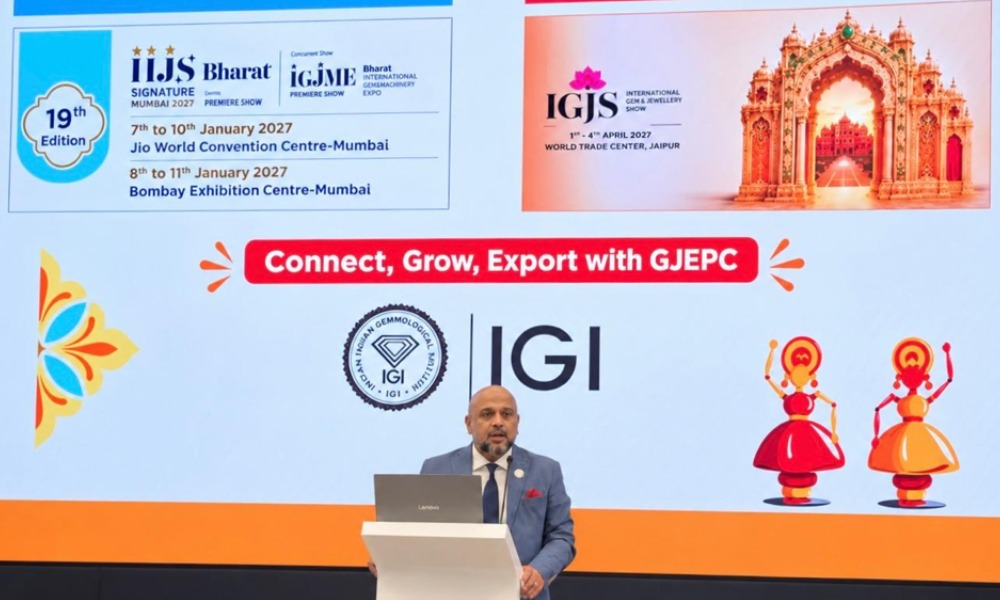
GJEPC stepped up its international buyer outreach for IIJS Bharat – Signature 2027, IGJS Jaipur and IJEX at an industry event organised by the International Gemological Institute (IGI) in Dubai.
Held at the Almas Tower Ballroom in Jumeirah Lake Towers, the IGI Ornamental QC Seminar brought together an audience of more than 70 jewellers, with leading retailers including Jawhara, Joyalukkas, Tajvi, Vinsmera, La Marquise, Bhima and Cara among the expected participants.
Ashish Sakhardande, Head – IJEX, GJEPC, represented the Council and delivered a presentation on its upcoming exhibitions and initiatives, placing particular emphasis on IIJS Bharat – Signature 2027, IGJS Jaipur and IJEX, highlighting its new features and inviting UAE buyers to register for the Mumbai and Jaipur shows.
The UAE remains an important market for Indian jewellery exporters, making direct engagement with retailers and jewellery companies a key part of the buyer mobilisation strategy.
The Dubai event created opportunities for participating Indian exporters to connect directly with potential buyers. Business meetings and networking interactions were facilitated with several UAE-based companies, allowing exporters participating through IJEX to develop new commercial contacts.



Kangana Ranaut Unveils PNG Jewellers New Showroom In Ayodhya~

GGJS 2026 Concludes With High-Volume Trade and Strategic Focus On Next-Gen Leadership

The Solitaire Festival Of India Concludes; Bumper Prize Winner At Ranka Jewellers Wins XUV 7XO
GGJS 2026 Concludes With High-Volume Trade and Strategic Focus On Next-Gen Leadership

ABARAN Commemorates The 125th Birth Anniversary Of Founder Shri Burde Sadananda Kamath With Special Gold Coin Launch

MCX Gold Silver Futures See Dip
-
 National News2 hours ago
GGJS 2026 Concludes With High-Volume Trade and Strategic Focus On Next-Gen Leadership
-
 National News7 hours ago
ABARAN Commemorates The 125th Birth Anniversary Of Founder Shri Burde Sadananda Kamath With Special Gold Coin Launch
-
 National News7 hours ago
MCX Gold Silver Futures See Dip
-
 National News1 hour ago
Kangana Ranaut Unveils PNG Jewellers New Showroom In Ayodhya~
