
National News
Bhima Gold Unveils Ashtalakshmi Coin Collection for Akshaya Tritiya, Blending Devotion with Exquisite Design
A culturally rooted, insight-led launch that reimagines festive gold buying through storytelling, symbolism, and spiritual relevance.


In a move that blends cultural storytelling with product innovation, Bhima Gold has unveiled its Ashtalakshmi Coin Collection for Akshaya Tritiya – positioning gold not just as a purchase, but as a deeply symbolic expression of prosperity, faith, and intent.
Timed with one of India’s most significant gold-buying occasions, Akshaya Tritiya, the launch reflects a deeper cultural shift in consumer behaviour. While the festival continues to drive strong purchase intent, there is a growing preference for meaningful, purpose-led buying experiences over purely transactional consumption.
Aligned with this evolving mindset, the Ashtalakshmi coin collection has been thoughtfully conceptualised to blend tradition with deeper symbolism. Inspired by the eight sacred forms of Goddess Lakshmi, each coin represents a distinct dimension of prosperity—from wealth and nourishment to courage, knowledge, and continuity.
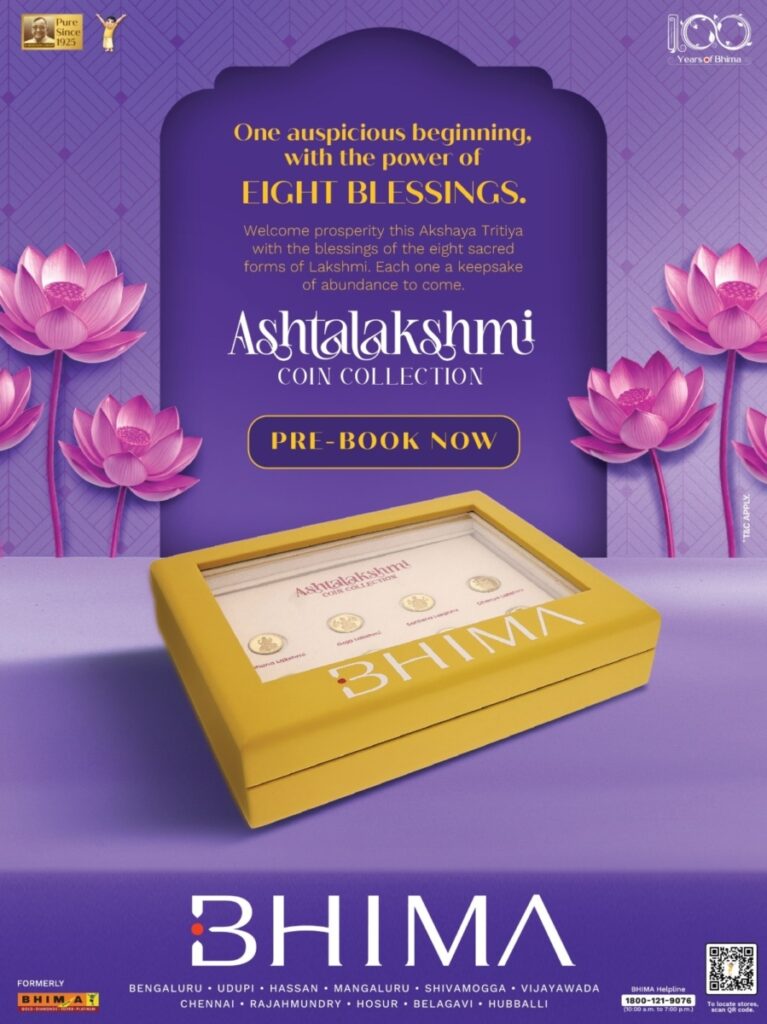
By bringing together Adi Lakshmi, Dhana Lakshmi, Dhanya Lakshmi, Gaja Lakshmi, Santana Lakshmi, Veera Lakshmi, Vijaya Lakshmi and Vidya Lakshmi, the collection reframes gold coins from being a generic festive purchase to a story-driven, culturally immersive product experience – one that resonates across generations and belief systems.
This launch also aligns with Bhima Gold’s larger centenary narrative of “Together Purever,” which focuses on legacy, shared traditions, and evolving consumer meaning. The collection becomes an extension of that philosophy – reinforcing how heritage brands are reinterpreting tradition for a more aware and emotionally driven consumer.
Customers can pre-book their favourite jewellery by paying just 10% in advance & get their jewellery on Akshaya Tritiya at the lowest rate, which gives customers more flexibility and helps them plan their purchases with greater confidence, especially at a time when gold prices are high.
Akshaya Tritiya has traditionally been associated with intention, belief, and the aspiration for prosperity, extending beyond a purely transactional act of buying gold. The Ashtalakshmi Coin Collection has been conceptualised to reflect this deeper cultural and spiritual significance, with each coin designed to carry a distinct meaning and sense of purpose. The initiative also aligns with evolving consumer preferences, where there is a noticeable shift towards jewellery that offers emotional, cultural, and spiritual resonance in addition to intrinsic value.
With gold prices near record highs and consumer sentiment becoming more considered, Bhima’s Ashtalakshmi Coin Collection signals a broader shift in the category — from price-led promotions to meaning-led engagement, where design, storytelling, and cultural relevance drive both differentiation and demand.
As legacy brands navigate a new era of conscious consumption, Bhima Gold’s latest offering highlights how tradition can be reimagined as experience, making gold buying not just an act of investment, but an expression of identity and belief.




National News
NPCI Defers Rollout Of UPI Merchant Discount Rate Until After Diwali
Given Typical Retail Margins Of 2%–6% On Bullion and Plain Gold Jewellery, Absorbing A 0.4% Fee—Or Up To ₹300 Per Large Transaction—Would Have Directly Eaten Into Festive Profitability. The Deferral Keeps Bottom Lines Protected Through Dhanteras and Diwali.

The National Payments Corporation of India’s (NPCI) UPI and Services Steering Committee has deferred the implementation of Merchant Discount Rates (MDR) on select person-to-merchant (P2M) UPI transactions until immediately after Diwali.
The move aims to protect consumer sentiment and keep operational costs steady for businesses during the peak festive shopping season. A specific implementation date will be announced separately.
Key Highlights
- Festive Relief for Retail: The deferment ensures merchants face no additional payment processing costs during peak festive demand, helping avoid disruptions to consumer spending.
- The Approved MDR Structure:
- Applies only to eligible P2M transactions above Rs 2,000 at a rate of 0.4%.
- Capped at Rs 300 for high-value transactions of Rs 75,000 and above.
- Everyday low-value payments and small merchants remain fully exempt, preserving zero-cost digital transactions for general consumers.
- Timeline Adjustment: Originally notified on September 15 for an October 15 rollout, the framework will now take effect post-Diwali, giving banks, payment aggregators, and merchants additional runway to align their systems and communicate terms clearly.
Jewellery purchase values routinely exceed the Rs 2,000 threshold and frequently touch or surpass the Rs 75,000 cap. Given typical retail margins of 2%–6% on bullion and plain gold jewellery, absorbing a 0.4% fee—or up to Rs 300 per large transaction—would have directly eaten into festive profitability. The deferral keeps bottom lines protected through Dhanteras and Diwali.
Introducing transaction fees just as footfall surges would have forced retailers to decide whether to absorb the cost or pass it on to buyers (via checkout surcharges or selective discounts). Avoiding this choice prevents awkward billing counter negotiations and cart abandonment during rush hours.



NPCI Defers Rollout Of UPI Merchant Discount Rate Until After Diwali

Mutual Engagement Ring-Wearing On The Rise, Insurance Lagging: Jewelers Mutual Group 2026 Engagement Ring Study

GJEPC Partners With The Leela To Offer Exclusive Hospitality Benefits To Members
-
 National News2 hours ago
GJEPC Partners With The Leela To Offer Exclusive Hospitality Benefits To Members
-

 DiamondBuzz3 hours ago
Richemont and Signet Jewelers Could Join Global Diamond Consortium In Bid For De Beers
-

 JB Insights2 hours ago
CIBIL Score Plays A Key Role In Festive Financing
-

 National News2 hours ago
MCX Gold, Silver Surge Ahead On US Inflation Data, Crude Price Dip
