DiamondBuzz
Alrosa Revenue Dips 6% in First Nine Months of 2025 Amid Sanctions and Market Slowdown

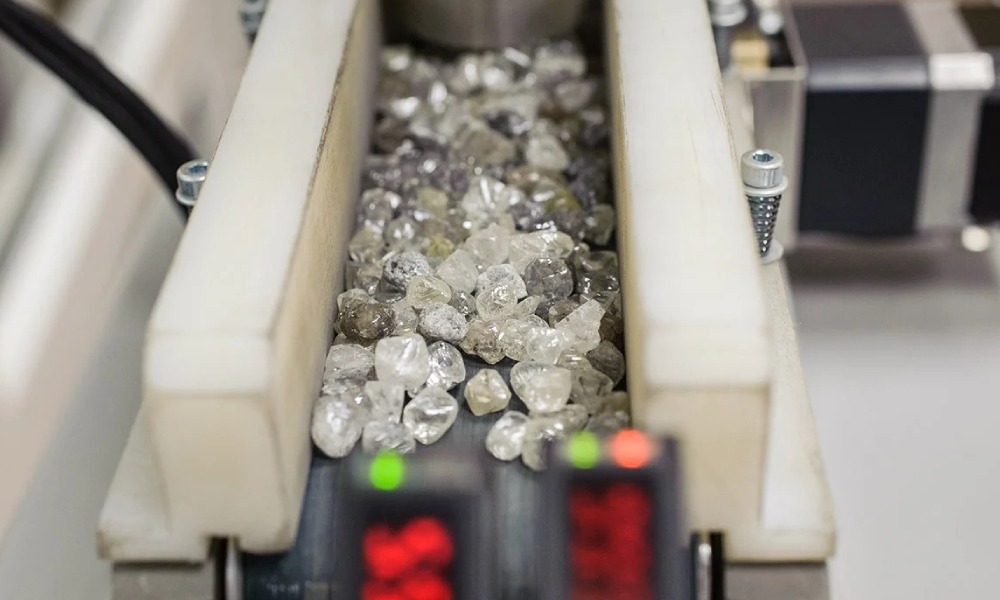
Despite declining sales under Western sanctions, Alrosa’s profit rises 27% on Angolan asset sale; analysts warn of continued pressure from a strong ruble and weak global demand.
Alrosa, Russia’s state-controlled diamond miner, reported a 6% year-on-year drop in revenue to RUB 156.76 billion ($1.93 billion) for the first nine months of 2025, as Western sanctions and a sluggish global diamond market weighed on sales.
Despite weaker revenue, the company’s net profit climbed 27% to RUB 35.75 billion ($441.3 million), supported by the completion of its Angolan asset sale in the first half of the year, Alrosa said in a statement last Thursday.
Ongoing sanctions have curtailed Alrosa’s access to key markets such as the US and , further tightening its trade network and limiting rough-diamond exports. The miner did not disclose its country-wise sales distribution or confirm whether Gokhran — Russia’s state gem repository — had purchased any of its stock during the period.
In contrast, rival De Beers posted a 10% increase in consolidated rough-diamond sales over the same period, highlighting the divergent fortunes of the world’s top two diamond producers.
Russian investment bank BCS described Alrosa as being caught in a “perfect storm” of challenges — including an overvalued ruble, global industry headwinds, and ongoing sanctions. However, the bank added that once the company stabilizes its operations, it could see gradual improvement and eventual revaluation.


DiamondBuzz
Botswana Looks Beyond Rough Diamond Sales, Eyes U.S. Jewelry Market
The Duty Exemption By US Presents An Opportunity For Domestic Jewelry Manufacturers In Gaborone To Bypass Traditional Middle-Market Hubs and Establish A Direct Pipeline To American Consumers


Grappling with a painful downturn in global rough-diamond demand, Botswana is pivoting its economic strategy: expanding up the supply chain directly into American retail shelves while leveraging its resource wealth to fund conservation and diversification.
Speaking on the sidelines of New York Climate Week, Bogolo Joy Kenewendo, Botswana’s Minister of Minerals and Energy, highlighted the southern African nation’s plan to capitalize on a 0% import-tariff rate to the U.S. market. The duty exemption presents an opportunity for domestic jewelry manufacturers in Gaborone to bypass traditional middle-market hubs and establish a direct pipeline to American consumers.
shift The push into value-added manufacturing comes as the world’s top diamond producer by value navigates a broader structural Diamond revenues have long formed the bedrock of Botswana’s post-independence balance sheet, underwriting universal secondary education and tuition-free university funding. However, recent market volatility has underscored the vulnerabilities of a mono-sectoral economy.
Under the Botswana Economic Transformation Programme (BETP)—an initiative spearheaded directly by President Duma Boko and his vice president—the government is directing resources toward manufacturing, agriculture, and broader mining sectors to reduce its heavy reliance on rough diamond sales.
To support its luxury exports, Botswana is recalibrating its brand narrative around origin, environmental stewardship, and social impact. The country recently announced a five-year extension of the “Okavango Eternal” partnership alongside De Beers Group and the National Geographic Society. The initiative aims to protect the ecological integrity of the Okavango River Basin while tying diamond purchases to conservation efforts.
With De Beers currently facing an impending ownership change, officials remain optimistic that any capital restructuring could bring additional funds into Botswana to accelerate its domestic economic transition.



KISNA Diamond and Gold Jewellery Rolls Out Nationwide ‘Shop Sparkle Win’ Campaign Across 218 Cities, With 823 Vehicles Up For Grabs

Nemichand Bamalwa Creates Nav Avatar Necklace For Maa Durga At Indian Museum’s Durga Puja

Kangana Ranaut Unveils PNG Jewellers New Showroom In Ayodhya~

GGJS 2026 Concludes With High-Volume Trade and Strategic Focus On Next-Gen Leadership
Nemichand Bamalwa Creates Nav Avatar Necklace For Maa Durga At Indian Museum’s Durga Puja
KISNA Diamond and Gold Jewellery Rolls Out Nationwide ‘Shop Sparkle Win’ Campaign Across 218 Cities, With 823 Vehicles Up For Grabs
-
 National News5 hours ago
GGJS 2026 Concludes With High-Volume Trade and Strategic Focus On Next-Gen Leadership
-
 National News35 minutes ago
Nemichand Bamalwa Creates Nav Avatar Necklace For Maa Durga At Indian Museum’s Durga Puja
-
 National News26 minutes ago
KISNA Diamond and Gold Jewellery Rolls Out Nationwide ‘Shop Sparkle Win’ Campaign Across 218 Cities, With 823 Vehicles Up For Grabs
-
 New Premises4 hours ago
Kangana Ranaut Unveils PNG Jewellers New Showroom In Ayodhya~