
JB Insights
2026 THE ROAD AHEAD Trust, Transparency, Technology, Transition (to organized retail)

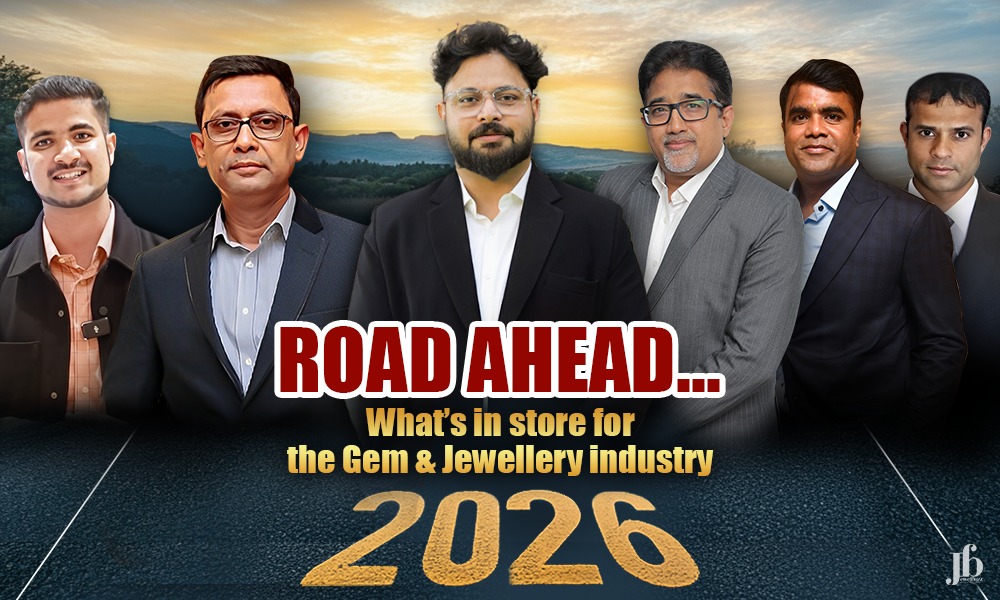
As the Indian jewellery industry approaches 2026, the sentiment among industry leaders is overwhelmingly positive. Despite anticipated fluctuations in metal prices and global economic uncertainties, the sector is poised for robust growth. The market is witnessing a decisive paradigm shift characterized by a transition from unorganized to organized retail, a surge in demand for lightweight and lower-karat jewellery, and the integration of advanced technology, including Artificial Intelligence (AI), into retail operations.
The financial outlook for the sector remains bullish. Rajesh Mehta, Chairman & Joint MD of Khazanchi Jewellers Ltd, highlights the immense scale of the market, noting, “Indian Gems & Jewellery industry is of Rs.7.31 lakh crores in the year 2025 and has potential to grow to Rs.11 lakh crores by 2030.”Mehta further predicts that gold and silver prices are expected to increase by 20–25% in 2026, driven by central bank investments and shifting consumer sentiments. He describes the cultural significance of the metal, stating, “Gold has always played a role of a third child, making life easy for families who hold gold, which acts as a strong hedge against inflation.”
Echoing this bullish sentiment, Paras Rajesh Rokde, Director of Rokde Jewellers Limited, notes that “Gold is likely to stay bullish—leading to firm prices with sharp festive-season spikes.” He adds that silver will play a “crucial supporting role” driven by affordability and industrial usage.

Product Trends: The Rise of Lightweight and Lower-Karat Jewellery A consistent theme across all leadership forecasts is the consumer shift toward “accessible luxury”—jewellery that is lightweight, design-led, and suitable for everyday wear.

Ramesh Kalyanaraman, ED-Candere by Kalyan Jewellers, Looking ahead to 2026, we believe the next phase will be defined by conscious consumption. Customers are increasingly evaluating brands on transparency, sustainability and values—whether through interest in lab-grown diamonds or demand for complete hallmarking clarity. Candere’s strategy is therefore centred on building a future-ready retail ecosystem that blends heritage credibility with modern design, technology and trust-remaining deeply aligned with the aspirations of today’s indian consumer.
Indian jewellery buying is shifting from asset-led purchases to self-expression and self-reward, and this is directly shaping Candere’s retail strategy. Younger consumers are embracing every day, self-led purchases, fuelling demand for lightweight jewellery. With high gold prices, design-led, versatile pieces are gaining preference, alongside growing expectations around transparency, personalisation and conscious consumption.
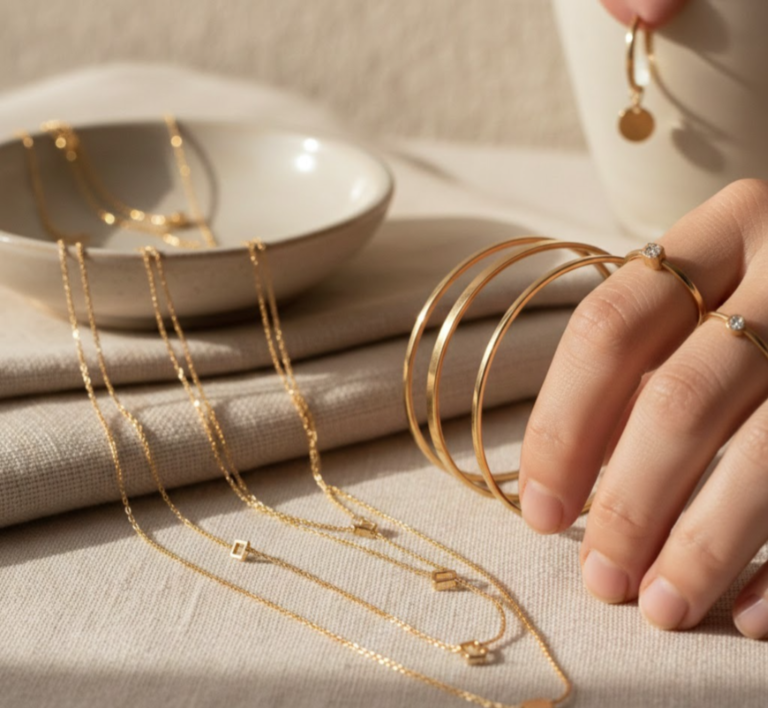
Saumen Bhaumik, MD of CaratLane, observes that “Indian consumers have shown adaptability—choosing lighter, design-forward pieces,” and predicts a wider adoption of lower-karat gold and diamond-studded silver designs. Daily Wearability: John Alukkas, MD of Jos Alukkas, points out that the shift to 18kt and 14kt “naturally allows for lighter constructions without compromising on design or durability,” aligning with the growing demand for stylish jewellery that can be worn comfortably every day.
As metal prices soar, the industry is moving toward 18kt, 14kt, and even 9kt gold. Rajesh Mehta notes that demand for “minimal jewellery in lower carat (18ct, 14ct & 9ct) will increase.”

Rahul Desai, MD & CEO of IIG, reinforces this, predicting a “decisive shift toward lighter, smarter, and more accessible luxury, driven by the rise of 9K jewellery.”
Pankaj Jagawat,MD-Utssav CZ Gold Jowels Ltd, The Indian jewelry industry is poised for consistent growth in 2026, pushed by rising customer self-assurance, deeper virtual adoption, and the accelerating shift closer to prepared retail. This momentum is further supported through developing domestic intake, growing urbanization, and solid export activity.

While high gold charges, regulatory changes, and financial uncertainty may also create intermittent pressures, gold and silver prices are expected to stay company with periodic volatility, encouraging customers to prioritise light-weight, layout-led and hallmarked merchandise.
Consumer Behavior: Trust, Transparency, and Organized Retail: The market is rapidly formalizing, with consumers prioritizing trust and experience over mere volume.
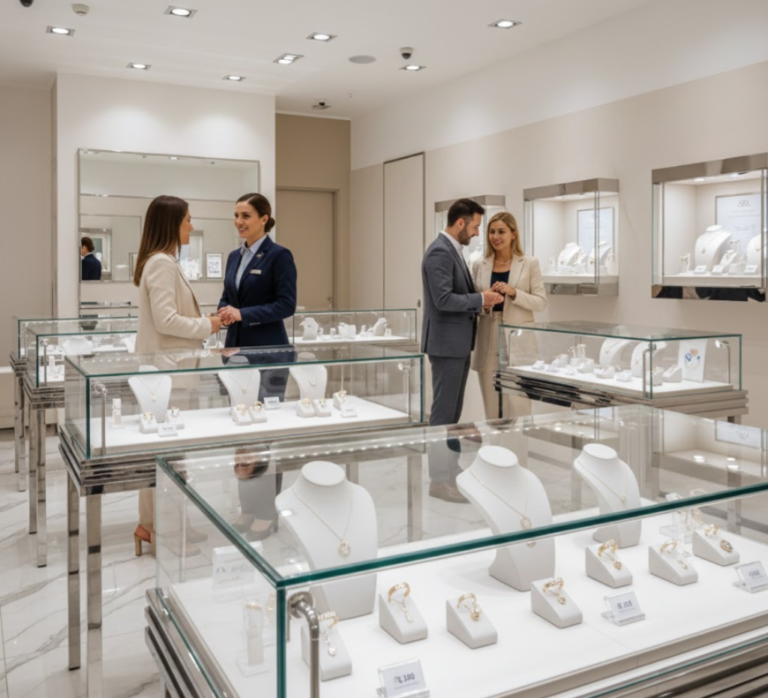
This sentiment is shared by Paras Rajesh Rokde, who predicts that in 2026, consumers will “give priority to certified purity, transparent pricing, and reliable buyback policies,” with significant growth expected in Tier-2 and Tier-3 cities.
Furthermore, John Alukkas highlights that buyers are exploring diverse materials, noting that his brand is “expanding focus on natural diamonds, precious stones, and high-demand lightweight jewellery” to cater to customers who prioritize value and originality.

The AI Era 2026 is projected to be a landmark year for the integration of technology in retail. Saumen Bhaumik envisions an industry with a “greater emphasis on trust, transparency, and technology-led experiences.”Taking this forecast further, Rahul Desai asserts that “AI will move from theory to practice.” He believes that 2026 will mark the true beginning of AI-enabled retail, stating: “Every retailer, small or large, will integrate at least one intelligent system, no matter how small.”
Call for for customised and ethically sourced jewelry will continue to bolster, mainly among more youthful consumers.


As the Indian jewellery industry hurdles toward 2026, it stands at the cusp of a transformative AI era, where trust, transparency, and technology-led experiences redefine consumer engagement. Organized retail gains momentum as buyers favor authenticity and immersive interactions over sheer volume, formalizing a market ripe for innovation.
source :JBExclusive




JB Insights
US Holiday Sales Will See 5.5% Growth For 2026 : Mastercard Economics Institute
This Resilience Reflects A Robust Labor Market, Rising Household Wealth, and Broad-Based Consumer Demand Across Income Cohorts. Overall, The 2026 Holiday Season Showcases An Adaptable U.S. Consumer Using Digital and AI Tools To Maximize Value While Continuing To Drive Broader Economic Momentum.

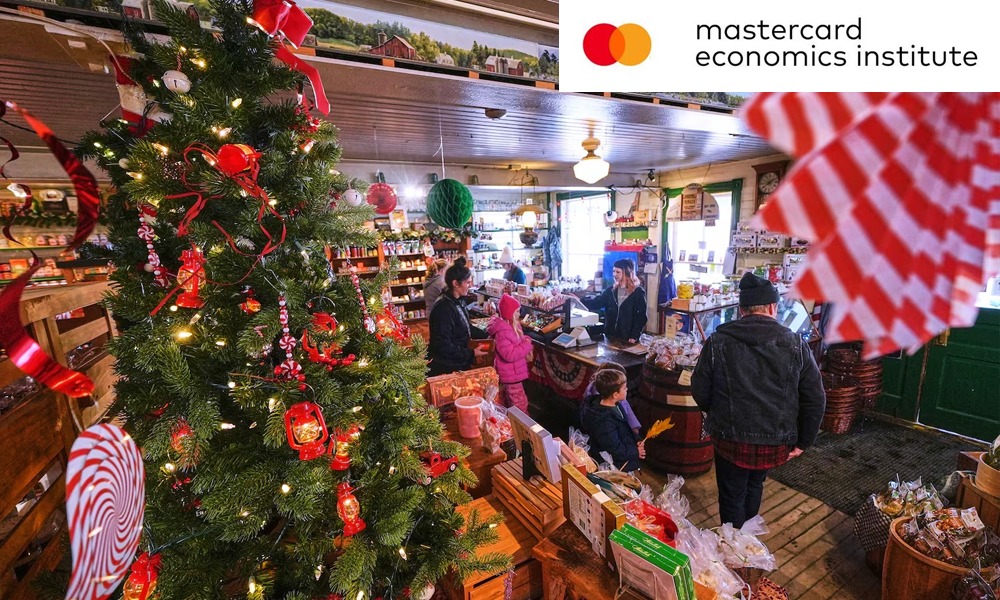
The Mastercard Economics Institute (MEI) forecasts a strong 2026 U.S. holiday shopping season (November 1–December 24), projecting retail sales excluding gas and autos to grow 5.5% year-over-year (YoY). This resilience reflects a robust labor market, rising household wealth, and broad-based consumer demand across income cohorts.
Key Drivers and Growth Channels
- Channel Performance: E-commerce continues to lead with an expected 11% YoY growth, but in-store sales are set to grow 3.6%—their strongest pace since 2022. This highlights the critical role of omnichannel strategies.
- Inflation Dynamics: Inflation accounts for 2.8 percentage points of the total 5.5% growth. Unlike last year’s tariff pressures, current price increases are driven by elevated energy/diesel costs and the massive AI infrastructure buildout.
- Calendar Shifts: A late Thanksgiving compresses the shopping window, pushing retailers toward early promotions. Additionally, Cyber Monday falling in November will shift significant online volume into the month.
The Role of Artificial Intelligence
AI is reshaping both prices and consumer behavior:
- Tech Inflation: High demand for memory chips and data infrastructure components has driven a 12.2% YoY increase in prices for info-processing equipment. Consequently, the consumer electronics category is projected to post outsized nominal sales growth (+10.7% YoY).
- AI Power Users: Consumers with paid AI subscriptions demonstrate distinct “optimization” habits. Data shows these users plan early, shop across a wider variety of boutique and specialty merchants, and aggressively target promotions during Thanksgiving weekend before transitioning to experience and hospitality spending in December.
Last-Minute Shopping Behavior
The final rush to Christmas offers key operational insights for retailers:
- In-Person and Malls: The final week before Christmas sees heavy physical store foot traffic, especially in enclosed shopping malls where consumers can complete multi-category purchases. Climate also plays a role: warmer-state residents (e.g., Florida, Nevada) are far more likely to make last-minute in-store runs than those in colder states.
- Transaction Value Trends: Average order values for children’s items peak near Black Friday, while premium categories—such as jewelry, cosmetics, luxury handbags, and department stores—see transaction values climb steadily from December 15, peaking on Christmas Eve as procrastinating shoppers pay a premium for convenience.
AI tools lower search costs for consumers, making price transparency higher than ever. Retailers must capture early November demand through targeted promotions before comparison tools push shoppers toward alternative or boutique brands.
Last-minute shoppers are price-inelastic and seeking speed. Malls and physical stores should maximize inventory for high-margin, rush-gift items (jewelry, cosmetics, designer goods, gift cards) in the final 10 days, leveraging store availability over promotional discounting.
Overall, the 2026 holiday season showcases an adaptable U.S. consumer using digital and AI tools to maximize value while continuing to drive broader economic momentum.



GGJS 2026 Concludes With High-Volume Trade and Strategic Focus On Next-Gen Leadership

The Solitaire Festival Of India Concludes; Bumper Prize Winner At Ranka Jewellers Wins XUV 7XO

GJEPC Promotes Key Trade Events At IGI Dubai Event
-
 National News3 days ago
P N Gadgil Jewellers Limited – Quarterly Update Q2FY27
-
 National News46 minutes ago
GGJS 2026 Concludes With High-Volume Trade and Strategic Focus On Next-Gen Leadership
-

 National News5 hours ago
MCX Gold Silver Futures See Dip
-
 National News5 hours ago
ABARAN Commemorates The 125th Birth Anniversary Of Founder Shri Burde Sadananda Kamath With Special Gold Coin Launch
