

By Invitation
Secured Gold Loans vs. Collateral Free Credit: Which One Truly Offers Peace of Mind?
By Priyank Kothari, Director of Arvog

Life throws curveballs. Whether it’s a medical emergency, a sudden travel plan, or a business cash crunch. when you need money fast, choosing the right kind of loan matters. Should you take a personal loan without any collateral, or borrow money against the gold sitting idle at home?
More people in India are leaning toward gold loans and not without good reason.
What’s the Real Difference?
- Gold Loans (Secured): You give your gold to the lender jewellery, coins, or bars and they lend you a portion of its value, usually 60–75%. Once you repay, your gold comes back to you, just as it was.
- Collateral Free Loans: These don’t need any security, but lenders will look closely at your credit score, income, and repayment history. If you miss payments, it can hurt your credit profile, and collection calls can be stressful.
Why Gold Loans Are Catching On
Let’s look at what the numbers say:
- From Rs1.16 lakh crore to Rs2.51 lakh crore in just one year gold loans grew 115% between May 2024 and May 2025.
- Disbursements jumped by 124% year over year.
- Industry experts predict the gold loan market could touch Rs.15 lakh crore by FY27, with NBFCs driving a big chunk of that growth.
Clearly, this isn’t just a trend it’s becoming a go to financial choice.

What Makes Gold Loans So Attractive?
1. Lower Interest Rates
Since your gold backs the loan, lenders take on less risk. That usually means lower interest rates than a collateral free loan.
2. Quick and Easy Process
Need cash fast? Gold loans are often processed within a few hours with minimal paperwork.
3. Credit Score Not a Dealbreaker
Even if your credit history isn’t perfect, your gold can still help you get the funds you need.
4. Your Gold Is Safe
It’s assessed in your presence, securely packed, stored in top tier vaults, and often insured arguably safer than keeping it at home.
What About Collateral Free Credit?
Personal loans without collateral do offer quick access, but they come with a few caveats:
- Higher interest rates make them costlier over time.
- You need a strong credit profile and steady income to get a good deal.
- A few missed payments can hurt your credit score and stay on your record for years.
- High interest + long tenures = a debt trap if you’re not careful.
So, Which One Gives You Real Peace of Mind?
If you own gold and need money in a hurry, gold loans give you four big wins. lower interest, fast disbursal, less paperwork, and the comfort of knowing your credit score isn’t standing in your way.
In uncertain times, gold loans offer something rare a way to raise money quickly, without losing control or peace of mind.
Jb Exclusive: Digital View


By Invitation
India’s Next Decade in Jewellery Exports: Scale, Discipline & Global Positioning
By Darshan Chauhan, Director –

Sky Gold Ltd.
India’s jewellery export journey has been built on generations of craftsmanship, entrepreneurial resilience and an unmatched manufacturing ecosystem. From artisan-led workshops to technologically advanced facilities, the country has steadily earned global recognition as a reliable sourcing destination. Yet the coming decade represents a transition. The conversation is no longer only about producing more; it is about exporting smarter, operating with discipline and positioning India as a structured global partner rather than merely a manufacturing base.
The global jewellery trade itself is undergoing a quiet transformation. International buyers today evaluate suppliers through a wider lens. Design capability and competitive pricing remain important, but equal weight is now given to compliance, transparency, delivery consistency and financial stability. Export relationships are becoming long-term strategic partnerships rather than transactional buying arrangements.
For Indian exporters, this shift presents both an opportunity and a responsibility.
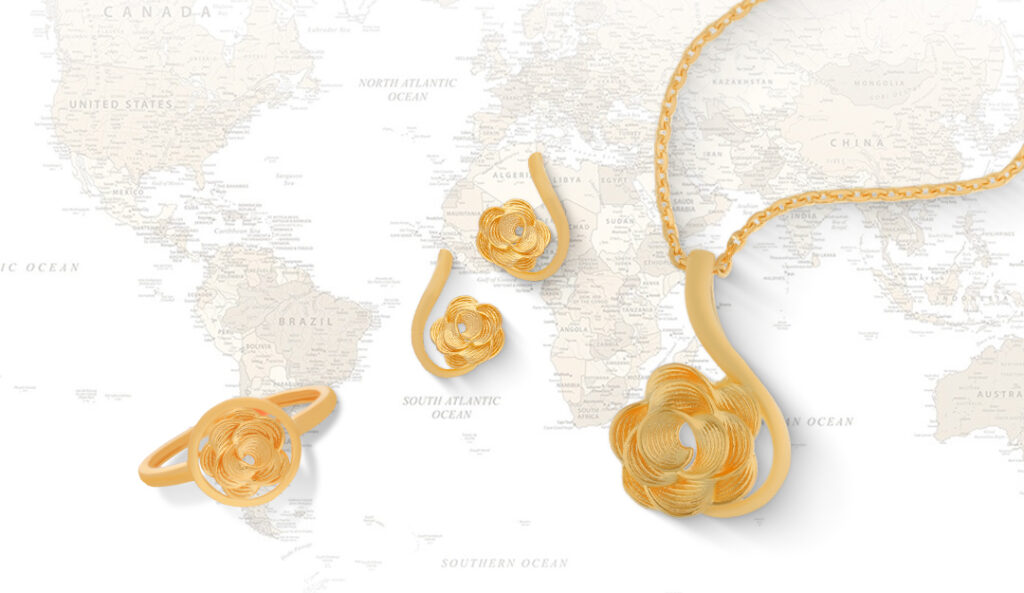
One of the most significant changes ahead will be market diversification. The United States has historically driven a substantial share of India’s jewellery exports, and it will continue to remain a vital market. However, concentration in a single geography exposes businesses to currency fluctuations, economic cycles and regulatory shifts. The Middle East has emerged as a strong growth corridor, supported by trade agreements, logistical advantages and evolving consumer demand. At the same time, regions such as Australia and parts of Europe are opening opportunities for exporters willing to meet higher compliance standards.
Diversification, therefore, is not about expanding aggressively into every market. It is about building balanced exposure that enhances stability while protecting margins.
Alongside geographic expansion, compliance is becoming a defining factor in global positioning. Responsible sourcing practices, traceability systems and governance standards are increasingly shaping procurement decisions. International brands are consolidating supplier networks and partnering with exporters who demonstrate reliability beyond production capability. In this environment, compliance should not be viewed as an external obligation. It strengthens credibility and enables access to premium markets where trust carries measurable value.
Equally important is capital discipline. Jewellery exports operate within a high-value commodity framework where gold price volatility directly impacts profitability. Elevated gold prices amplify the cost of inefficiencies, whether through excess inventory, unhedged exposure or extended payment cycles. Export growth in the coming decade will depend on closer alignment between procurement, treasury management and production planning. Structured hedging practices, bullion banking relationships and disciplined working capital management will increasingly separate stable exporters from vulnerable ones.
Manufacturing evolution will also play a central role. India already possesses scale; the next step is precision. Technology adoption, including CNC manufacturing, advanced prototyping and integrated digital production systems, enhances consistency while reducing wastage. Global buyers value predictability as much as creativity. When craftsmanship is supported by
process-driven manufacturing, India’s competitive advantage becomes far more compelling.
At the same time, India must gradually move beyond being perceived solely as a cost-competitive supplier. Countries that have successfully strengthened their global positioning have invested in design identity, innovation and long-term brand perception. Indian exporters have the opportunity to shift the narrative toward reliability, creativity and manufacturing excellence. Building deeper partnerships with international buyers, rather than focusing only on order volumes, will help achieve this transition.
Sustainability is emerging as another critical dimension of export strategy. Renewable energy adoption, responsible sourcing and environmental accountability are becoming key evaluation criteria in developed markets. These initiatives are not merely ethical considerations; they are risk-management tools that safeguard long-term market access. Exporters who align early with global sustainability expectations will find themselves better positioned as international standards continue to evolve.
Domestic retail trends are also influencing export direction more than before. The growing demand for lightweight, versatile jewellery in India mirrors changing consumer preferences globally. Faster design cycles and data-led product planning are reshaping manufacturing strategies. Exporters who remain closely connected to consumer behaviour both domestically and internationally gain stronger foresight into demand patterns.
The next decade of Indian jewellery exports will therefore be defined by alignment: scale supported by systems, creativity supported by discipline and growth supported by governance. India already has the foundation, skilled artisans, manufacturing depth and strong global relationships. The opportunity now lies in strengthening operational maturity.
If approached with clarity and intention, India can transition from being viewed primarily as the world’s jewellery workshop to being recognised as a trusted global partner in design, manufacturing and supply chain excellence. The future of exports will not depend solely on how much we produce, but on how confidently global markets rely on us.
In that shift lies the true potential of India’s next decade in jewellery exports.



RiaceWax AUTOMATIC BELT SYSTEM INTUITIVE: Innovation. Precision. Productivity

DAIMANTE: Symbolic Modernism – Both Timeless and Modern

From Gold Weight to Masterpiece: Storytelling and Craftsmanship Are Redefining Premium Jewellery Value

BlueStone-Backed Ethera Accelerates Expansion With Four New Metro Stores Across India

India-UAE Jewellery Dialogue Draws 200+ Stakeholders, Reinforces Trade Confidence
From Gold Weight to Masterpiece: Storytelling and Craftsmanship Are Redefining Premium Jewellery Value
-
 New Premises14 hours ago
BlueStone-Backed Ethera Accelerates Expansion With Four New Metro Stores Across India
-
 International News15 hours ago
India-UAE Jewellery Dialogue Draws 200+ Stakeholders, Reinforces Trade Confidence
-
 JB Insights11 hours ago
From Gold Weight to Masterpiece: Storytelling and Craftsmanship Are Redefining Premium Jewellery Value
-
 Designer Focus11 hours ago
DAIMANTE: Symbolic Modernism – Both Timeless and Modern
