International News
June 2026 Gold ETF Flows-H1 flows remain positive: WGC GOLDHUB
Gold Market Trading Volumes Pulled Back In June Yet The H1 Average Reached An All-Time High.


June 2026 saw continued outflows from funds listed in all regions, yet global gold ETF flows have remained positive y-t-d. Global gold ETFs’ AUM reached US$526bn by the end of June, a 6% fall in H1 due mainly to a lower gold price; collective holdings in the first half were up 18t to 4,047t. Gold market trading volumes pulled back in June, yet the H1 average reached an all-time high.
June and H1 in review
Global investors further trimmed their gold ETF holdings in June. Physically backed gold ETFs1 saw outflows of US$8.9bn in the month. All regions experienced outflows, with North America losing the most. In the month, global gold ETFs’ total assets under management (AUM) fell 13% to US$526bn, whilst holdings reduced by 74t to 4,047t.
Despite June’s loss, global gold ETF flows remained positive at US$8bn in H1. Asia dominated global inflows – the region’s strongest H1 on record – while North America was the only region with losses. Europe saw healthy inflows. Global gold ETFs’ AUM fell 6% in H1, reflecting the lower gold price despite positive inflows. Collective holdings rose slightly by 18t (Chart 1).
Regional overview
North American funds lost US$5.5bn in June, bringing the region’s H1 outflows to US$7.7bn and resulting in the weakest first half since 2013. The notable gold price pullback in the month served as a key driver for investors to dial back their allocation to gold ETFs. As new Fed Chair Warsh sent hawkish – as the market interpreted – signals and the US-Iran conflict pushed inflation fears up, expectations intensified of higher interest rates ahead. This anticipation contributed to rising real yields and a strengthening dollar, pushing up investors’ opportunity costs of holding gold.
Looking ahead, regional gold ETF flows could stabilise. The macro consensus scenario in our 2026 Mid-Year Gold Outlook suggests relatively stable gold performance in H2, with potential catalysts possibly brewing a breakout in other scenarios. Meanwhile, uncertainties surrounding geopolitics, economic growth and financial markets linger. This backdrop may continue to support investor demand for portfolio protection and sustain interest in gold ETFs as a strategic safe-haven allocation.
European funds lost US$818mn in June, trimming their H1 inflows to US$3.2bn. Outflows were seen across major markets in the region during June. Across the region, we believe gold price weakness has been a major factor leading to net sales of gold ETFs by investors. Also in June, the European Central Bank hiked rates by 25bps, the first time since September 2023 citing inflation concerns amid the ongoing US-Iran conflict. This move may have deterred some investors from gold. We have also observed continued outflows from FX-hedged products listed in the region, mainly in Switzerland amid local currency depreciation against the dollar, adding to European fund losses in June.
Asia witnessed outflows of US$2.3bn in June, the worst month on record. Despite this, the region experienced its strongest H1 ever, leading global inflows with a US$12bn addition. The June loss was mainly from Chinese funds, as local investor risk appetite continued to improve amid equity market gains and a weaker gold price. Japanese funds also saw outflows in the month as the Bank of Japan hiked rates, pushing up local investors’ opportunity cost of holding gold. India buckled the trend, attracting inflows in the month as local investors remained optimistic about the gold price and viewed the dip as entry opportunities.
Funds in other regions saw mild outflows of US$262mn in June, trimming their y-t-d buying to US$106mn. In June, Australian funds shed US$197mn and funds in South Africa lost US$36mn.
An unprecedented H1
Global gold market trading volumes moderated in June, falling 13% m/m to an average of US$373bn/day as activity cooled across over-the-counter (OTC) and exchange-traded markets. OTC activities declined 13% to US$214bn/day, although they continued to run well above the 2025 average of US$180bn/day. Trading volumes at the LBMA averaged US$187bn/day in June, 14% lower than May but 16% higher than the 2025 average. Meanwhile, exchange-traded contract volumes fell 13% to US$153bn/day. The notable exception was the gold ETF market, where trading activity increased 23% m/m to US$6.9bn/day, reflecting sustained investor interest.
Global gold market liquidity surged to record levels in H1 at US$488bn per day; the strongest semi-annual average in our data series (Chart 2). Strength was broad-based, with every major segment posting its most active semi-annual averages on record. OTC trading, led by the LBMA, averaged US$249bn/day, substantially above 2025 levels and underscoring the depth of institutional participation. Exchange-traded volumes also jumped, reaching US$227bn/day – 22% higher than the 2025 average – supported by elevated investor activity. Meanwhile, global gold ETF trading averaged US$12bn/day – up 73% from 2025 – fuelled primarily by robust trading in US funds as investors increasingly turned to gold amid heightened macroeconomic and geopolitical uncertainty.
Despite a weaker gold price, total COMEX net longs rebounded by 16% m/m to 538t, the highest month-end level since January.3 It is noteworthy that managed money net longs have been rising since early June despite a weakening gold price. A closer look at the CFTC positioning data reveals a divergence across investor cohorts: while non-reportable net longs – a proxy for retail participation – reduced during the month, other reportables, which capture large trades outside the managed money category, increased by 16% m/m.
Over H1, managed money net longs remained broadly stable, declining by just 43t y-t-d. But as was evident in June, investor behaviour through H1 differed: retail positioning largely tracked short-term price movements while larger traders’ positions have, in general, stayed stable since mid-March.


International News
DMCC Concludes 14th Dubai Precious Metals Conference
14th Dubai Precious Metals Conference Brought Together Almost 800 Delegates and 34 Speakers To Examine Changing Architecture Of Global Precious Metals Markets. The Conference Examined Gold’s Changing Role In The International Financial System, The Reconfiguration Of Trade Corridors, and The Technologies and Financial Structures Shaping The Sector
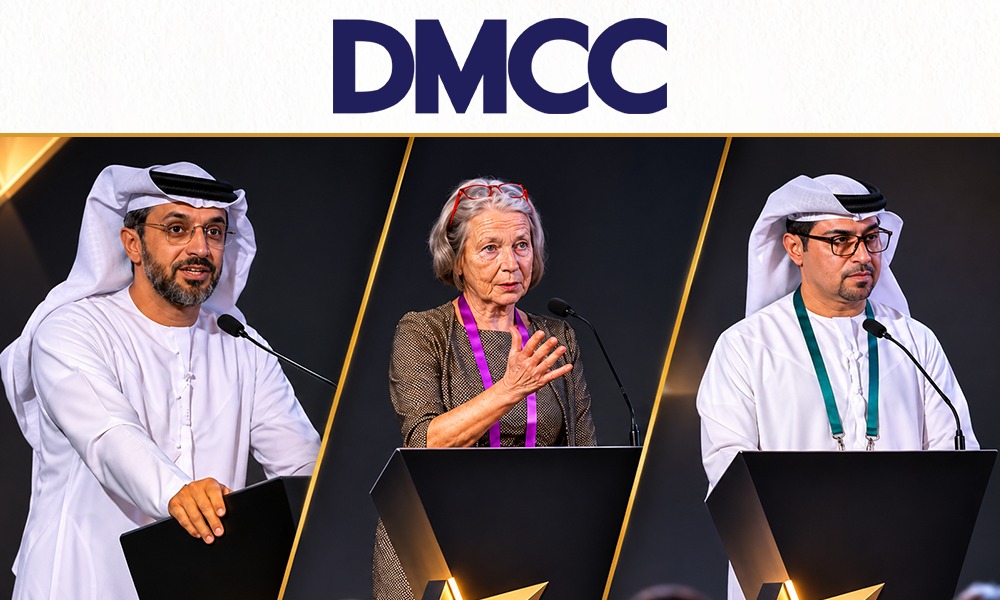
DMCC, the leading international business district that drives the flow of global trade through Dubai, has concluded the 14th Dubai Precious Metals Conference (DPMC), bringing together nearly 800 industry leaders, policymakers and market participants to Dubai to examine the forces reshaping global precious metals markets.
New figures showed approximately 2.4 tonnes of gold have been physically settled through the Dubai Gold and Commodities Exchange (DGCX) Spot Gold T+0 Same-Day Settlement Contract, with more than 2.6 tonnes of trading activity since its launch in June. The figures point to growing demand from participants across the gold value chain for regulated, transparent and physically deliverable trading through Dubai’s market infrastructure.
DGCX traded 2.3 million contracts with a combined value of more than USD 57.7 billion in 2026, up 32% by volume and 46% by value on 2025, according to exchange figures. The exchange has also introduced a Perpetual Spot Gold Contract, widening its precious metals offering.
The figures come as Dubai consolidates its position in global bullion markets. The emirate’s foreign gold trade rose 60 per cent year on year to approximately AED 1 trillion (USD 272 billion) in 2025, while physical gold trading across the UAE reached around 2,750 tonnes, making the country the world’s second-largest physical gold trading hub. An estimated 13-15% of globally traded gold now passes through Dubai each year.
Ahmed Bin Sulayem, Executive Chairman and Chief Executive Officer, DMCC, said:
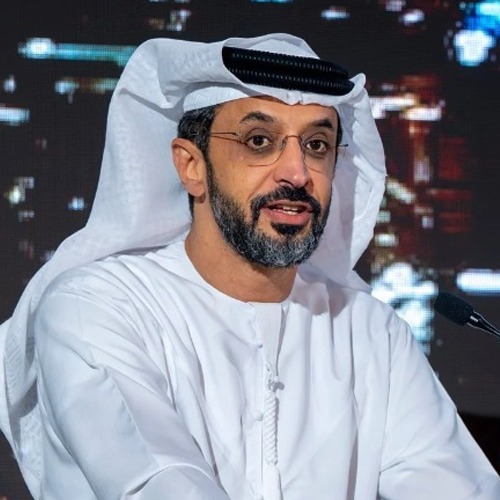
“Dubai’s foreign gold trade reached approximately AED 1 trillion (USD 272 billion) in 2025, up 60 per cent on the previous year. Scale of this kind brings a responsibility to uphold the highest standards of integrity, and to keep investing in the infrastructure, services, and relationships that give market participants confidence. The Dubai Gold Strategy sets a clear direction for the next phase of growth across the value chain, from sourcing, refining, and trading to storage, financing, price discovery, digital tokenisation, and retail.”
“DMCC and DGCX have a central role in turning that direction into practical benefits for the market. Since DGCX launched its Gold Spot T+0 Contract on 22 June, approximately 2.4 tonnes of gold have been physically settled through it. By bringing regulated trading, central clearing, and same-day physical settlement together, the contract gives participants greater price certainty and allows them to deploy capital more efficiently. Working with our members and international partners, we will continue building the infrastructure businesses need to trade with confidence and to sustain Dubai’s position among the world’s leading precious metals centres.”
Held under the theme “Reshaping Global Precious Metals Markets”, the conference examined gold’s changing role in the international financial system, the reconfiguration of trade corridors, and the technologies and financial structures shaping the sector. Sessions covered central bank reserve strategies, market liquidity, the interplay between physical and financial gold markets, new approaches to financing, and digital ownership, provenance and traceability.
Isabelle Strauss-Kahn, a former senior official at the World Bank and Banque de France, delivered the headline address, drawing on her experience in central banking, sovereign reserve management and international financial markets.
The programme’s 34 speakers included representatives of government, banks and financial institutions, alongside industry bodies including the World Gold Council and the London Bullion Market Association (LBMA).



DMCC Concludes 14th Dubai Precious Metals Conference

Silver Wholesale Goes Digital: How India’s 925 Silver Trade Is Changing The Way It Buys and Sells

Malabar Gold & Diamonds Strengthens Its Presence in Lucknow With New Showrooms In Mahanagar and Patrakarpuram
Silver Wholesale Goes Digital: How India’s 925 Silver Trade Is Changing The Way It Buys and Sells

From White Gold to Sterling Silver: Gargi by PNGS Opens Its 51st Store in Akola
Malabar Gold & Diamonds Strengthens Its Presence in Lucknow With New Showrooms In Mahanagar and Patrakarpuram
-
 JB Insights16 hours ago
Silver Wholesale Goes Digital: How India’s 925 Silver Trade Is Changing The Way It Buys and Sells
-
 New Premises2 days ago
From White Gold to Sterling Silver: Gargi by PNGS Opens Its 51st Store in Akola
-
 New Premises17 hours ago
Malabar Gold & Diamonds Strengthens Its Presence in Lucknow With New Showrooms In Mahanagar and Patrakarpuram
-
 International News16 hours ago
DMCC Concludes 14th Dubai Precious Metals Conference