
National News
Gold, silver price decline continues, downward momentum may continue in the short term

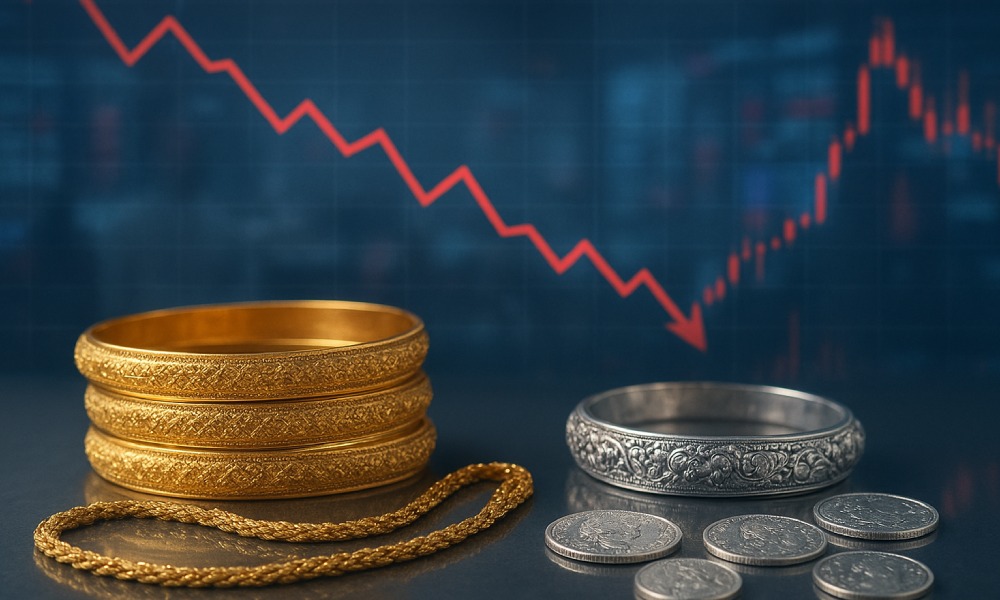
Gold and silver prices in India continued their downward trend for the third consecutive day, following record highs seen just before Dhanteras 2025. By the end of Tuesday’s trading session, gold was down 2.06%, closing at Rs.1,18,461 per 10 grams, while silver dropped 1.36% to Rs.1,41,424 per kilogram. On the Multi Commodity Exchange (MCX), gold opened 0.7% lower at Rs.1,20,106 per 10 grams, compared to the previous session’s Rs.1,20,957. Silver also registered a similar decline, opening 0.69% lower at Rs.1,42,366 per kilogram.
The fall comes after a strong two-month rally, with traders now booking profits amid changing global cues. After a solid two-month rally, gold and silver prices came under heavy selling pressure as both metals slipped below key psychological levels — $4,000 for gold and $47 per ounce for silver. The decline is being driven by a stronger dollar index and renewed optimism over US trade discussions with China and India.
Analysts opine that gold prices continue to decline as safe-haven demand weakens amid optimism over a potential US–China trade deal and a stronger US dollar.Investors considering gold as a hedge should prepare for short-term volatility and sharp price swings Experts attribute this continued weakness to profit booking and global market cues. Many analysts warn that the downward momentum may persist in the short term, urging investors to monitor price movements before making fresh purchases.Despite the current dip, gold remains significantly higher than pre-festive season levels, highlighting ongoing volatility in the bullion market



National News
NPCI Defers Rollout Of UPI Merchant Discount Rate Until After Diwali
Given Typical Retail Margins Of 2%–6% On Bullion and Plain Gold Jewellery, Absorbing A 0.4% Fee—Or Up To ₹300 Per Large Transaction—Would Have Directly Eaten Into Festive Profitability. The Deferral Keeps Bottom Lines Protected Through Dhanteras and Diwali.

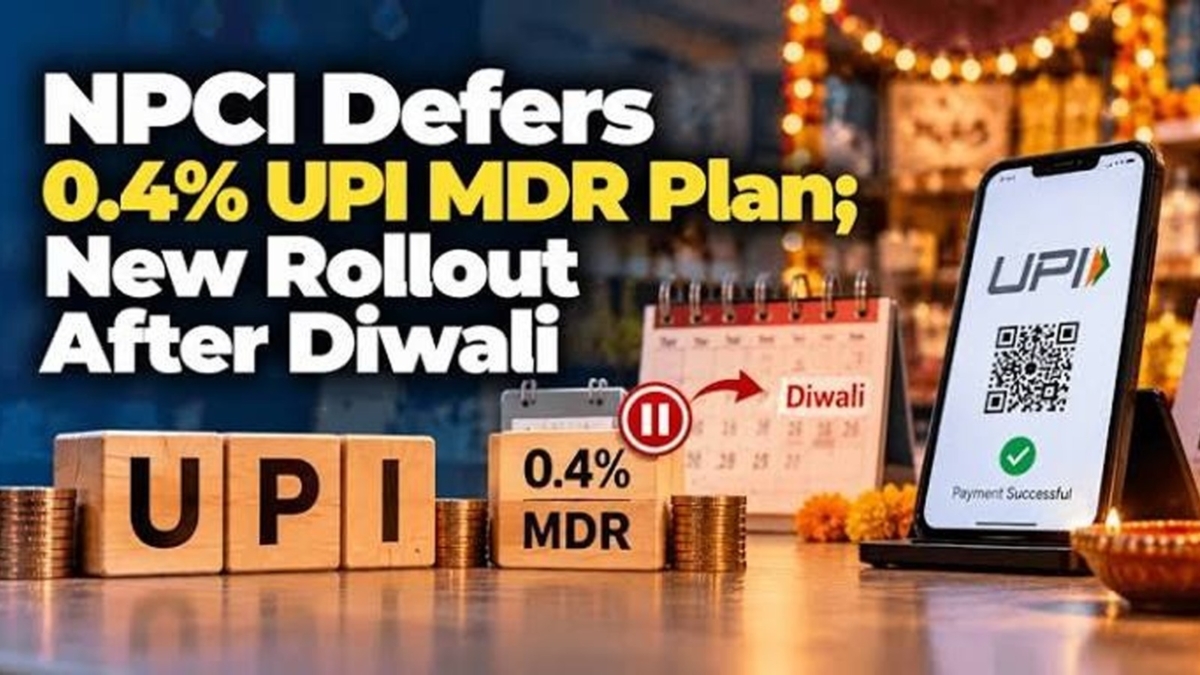
The National Payments Corporation of India’s (NPCI) UPI and Services Steering Committee has deferred the implementation of Merchant Discount Rates (MDR) on select person-to-merchant (P2M) UPI transactions until immediately after Diwali.
The move aims to protect consumer sentiment and keep operational costs steady for businesses during the peak festive shopping season. A specific implementation date will be announced separately.
Key Highlights
- Festive Relief for Retail: The deferment ensures merchants face no additional payment processing costs during peak festive demand, helping avoid disruptions to consumer spending.
- The Approved MDR Structure:
- Applies only to eligible P2M transactions above Rs 2,000 at a rate of 0.4%.
- Capped at Rs 300 for high-value transactions of Rs 75,000 and above.
- Everyday low-value payments and small merchants remain fully exempt, preserving zero-cost digital transactions for general consumers.
- Timeline Adjustment: Originally notified on September 15 for an October 15 rollout, the framework will now take effect post-Diwali, giving banks, payment aggregators, and merchants additional runway to align their systems and communicate terms clearly.
Jewellery purchase values routinely exceed the Rs 2,000 threshold and frequently touch or surpass the Rs 75,000 cap. Given typical retail margins of 2%–6% on bullion and plain gold jewellery, absorbing a 0.4% fee—or up to Rs 300 per large transaction—would have directly eaten into festive profitability. The deferral keeps bottom lines protected through Dhanteras and Diwali.
Introducing transaction fees just as footfall surges would have forced retailers to decide whether to absorb the cost or pass it on to buyers (via checkout surcharges or selective discounts). Avoiding this choice prevents awkward billing counter negotiations and cart abandonment during rush hours.



NPCI Defers Rollout Of UPI Merchant Discount Rate Until After Diwali

Mutual Engagement Ring-Wearing On The Rise, Insurance Lagging: Jewelers Mutual Group 2026 Engagement Ring Study

GJEPC Partners With The Leela To Offer Exclusive Hospitality Benefits To Members
-
 National News2 hours ago
GJEPC Partners With The Leela To Offer Exclusive Hospitality Benefits To Members
-

 DiamondBuzz3 hours ago
Richemont and Signet Jewelers Could Join Global Diamond Consortium In Bid For De Beers
-

 JB Insights3 hours ago
CIBIL Score Plays A Key Role In Festive Financing
-

 National News2 hours ago
MCX Gold, Silver Surge Ahead On US Inflation Data, Crude Price Dip
