National News
Gold ETFs Attract Record ₹240 Billion as Investors Pivot from Equities
WGC report highlights resilient demand, rising digital gold purchases and steady investment interest despite record-high prices

Indian investors are increasingly turning to gold as a preferred asset class, with January witnessing record-breaking inflows into gold ETFs, even as prices touched historic highs.
According to a report by the World Gold Council (WGC), Indian gold ETFs recorded their ninth consecutive month of net inflows, reaching an unprecedented Rs.240 billion (US$2.5 billion) in January. This marked the third-highest inflow globally, after the US and China. Notably, gold ETF inflows surpassed equity funds for the first time, signalling a shift in investor asset allocation amid subdued domestic equity performance.
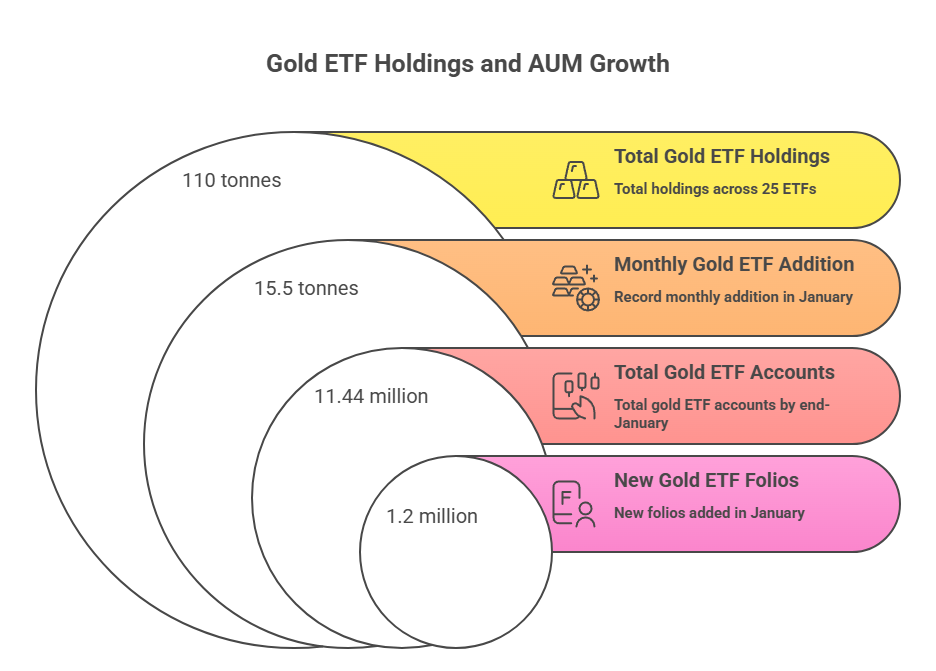
The surge in inflows, combined with elevated gold prices, pushed total assets under management (AUM) to Rs.1,842 billion (US$20 billion) by end-January — a more than threefold year-on-year increase. Cumulative holdings across 25 gold ETFs crossed the 100-tonne milestone, with a record 15.5-tonne monthly addition, taking total holdings to 110 tonnes.
The momentum continued into February, with estimated net inflows of Rs.46 billion between 1 and 12 February, adding another 3 tonnes. Gold ETFs now account for 2.3% of the total mutual fund industry AUM, the highest share on record, up from 0.8% a year ago.
Investor participation also strengthened significantly, with 1.2 million new folios added in January, taking total gold ETF accounts to 11.44 million.
Beyond ETFs, broader gold investment demand remains robust. Market feedback suggests consumer demand has stayed resilient despite record-high prices and volatility, particularly after the mid-December to mid-January inauspicious period. Buying has been skewed towards bars, coins and digital gold, supported by strong bullish sentiment and limited expectations of a correction.
Jewellery demand has turned more measured. Consumers are opting for staggered purchases instead of lump-sum buying, even for weddings. While jewellery volumes are estimated to be ~20% lower year-on-year, value growth has risen 25–30%, supported by elevated prices. Exchange of old gold remains high, accounting for 40–70% of transactions in some markets. Liquidation activity remains limited.
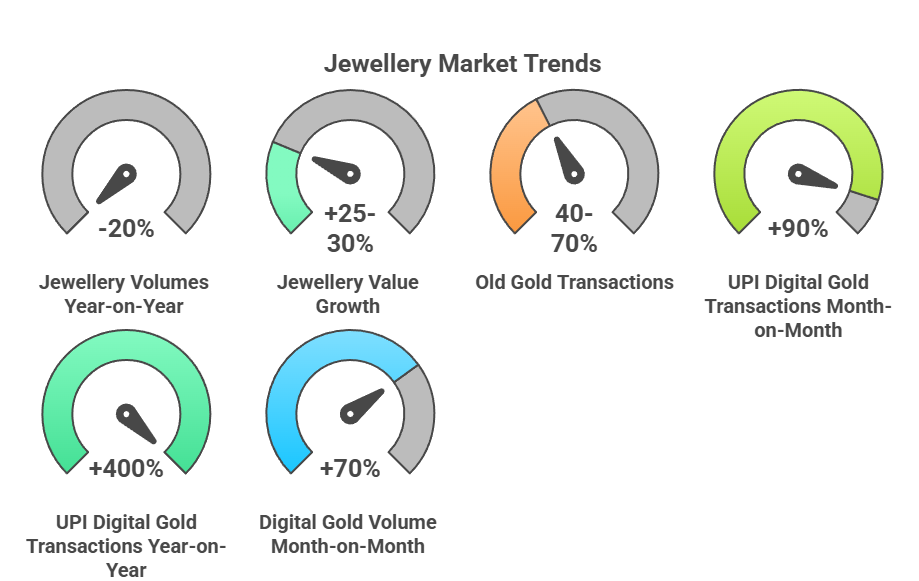
Digital gold purchases also surged. Transactions via UPI totalled ₹39 billion (US$432 million) in January — up nearly 90% month-on-month and over fourfold year-on-year. In volume terms, an estimated 2.6 tonnes were purchased, marking a 70% month-on-month increase.
The WGC noted that while ease of transaction and low minimum investment requirements continue to attract retail investors, digital gold remains unregulated, underscoring the need for comprehensive regulatory oversight as investor interest in gold strengthens across formats.
source: WGC



– Kirit Bhansali, Chairman, GJEPC

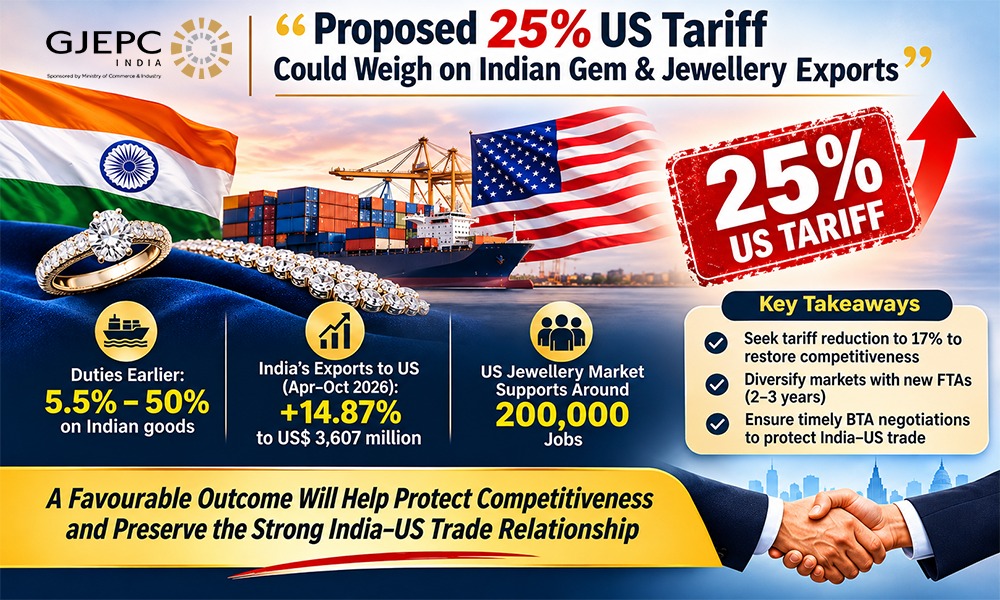
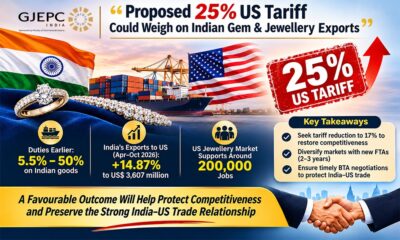
“India’s gem and jewellery sector has faced prolonged uncertainty from US tariff measures, with duties ranging from 5.5% to 50%, straining exports, payment cycles and logistics costs. Tariffs raise landed costs and retail prices, potentially dampening US consumer demand and affecting jobs and businesses across the value chain in both countries. The US remains a major jewellery market, supporting roughly 200,000 jobs.
Although the situation had begun to improve—with India’s gem and jewellery exports to the US growing 14.87% to US$3,607 million during April–October 2026 year-on-year—the proposed 25% US tariff on Indian goods could again weigh on the sector. Any increase in tariffs, or continued uncertainty over market access, would affect the competitiveness of Indian exports, disrupt order flows and compress exporters’ margins in this key market.
The industry is hopeful that the agreement will provide meaningful relief by reducing the tariff to 17%, restoring price competitiveness and creating a more favourable environment for exporters to sustain and grow their business in the US market.
While India’s new FTAs will help diversify export markets over time, building alternative buyer relationships could take two to three years, whereas the impact of proposed tariffs could be felt within 45 days to two months. Higher proposed tariffs on competitors such as Thailand, Vietnam and China may offer Indian exporters a relative advantage, though the benefit will depend on the final tariff structure. The industry remains resilient and hopeful that timely BTA negotiations will secure a favourable outcome, protect competitiveness and preserve the strong India–US trade relationship.”



The Architecture of Desire: Why True Luxury Lives In The Felt Experience By Dr. C. Vinod Hayagriv MD- C. Krishniah Chetty Group of Jewellers

GJEPC Quote On Proposed 25% Tariff By US

Make A Statement This Black Friday With Palmonas’ Top Jewellery Picks

5 Solitaire Mangalsutra Designs By Divine Solitaires For Every Style and Occasion
GJEPC Quote On Proposed 25% Tariff By US
The Architecture of Desire: Why True Luxury Lives In The Felt Experience By Dr. C. Vinod Hayagriv MD- C. Krishniah Chetty Group of Jewellers
-
 National News8 hours ago
5 Solitaire Mangalsutra Designs By Divine Solitaires For Every Style and Occasion
-
 National News7 hours ago
GJEPC Quote On Proposed 25% Tariff By US
-
 By Invitation5 hours ago
The Architecture of Desire: Why True Luxury Lives In The Felt Experience By Dr. C. Vinod Hayagriv MD- C. Krishniah Chetty Group of Jewellers
-
 National News7 hours ago
Make A Statement This Black Friday With Palmonas’ Top Jewellery Picks