
National News
GJEPC’s 4th Export Mentorship Program Prepares New Entrants for Global Markets
Fourth batch of the Export Mentorship Program trains 85+ participants through a structured one-month initiative focused on product readiness, compliance, FTAs, and global buyer connectivity.


The fourth edition of GJEPC’s Export Mentorship Program (EMP) equips domestic gems and jewellery businesses with the capability to compete in global markets, writes Dr. Rashmi Arora, Economist, GJEPC.
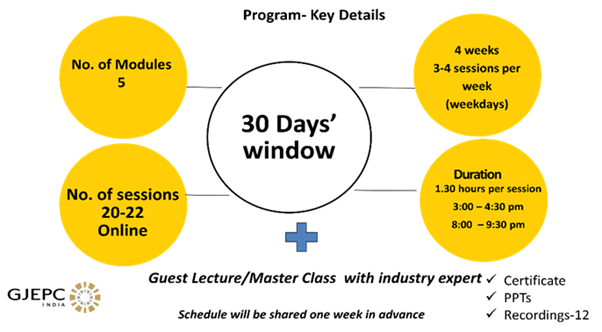
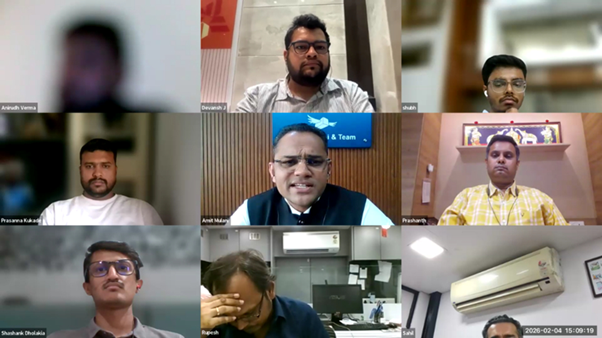
The Gem & Jewellery Export Promotion Council (GJEPC) commenced the 4th batch of its Export Mentorship Program (EMP) with an orientation session on 19 January 2026, bringing together more than 85 participants for a one-month structured initiative aimed at converting industry members into export-ready enterprises. The programme, comprising 22 sessions, focuses on practical mentoring, policy awareness, and market alignment to strengthen India’s gems and jewellery export ecosystem.
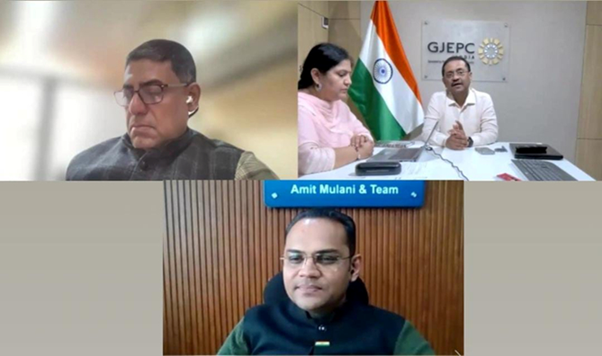
The Orientation session featured a detailed presentation of the programme’s vision and framework by Sabyasachi Ray, Executive Director, GJEPC, who outlined the need to build a new generation of exporters from within the sector while bridging the gap between policy support mechanisms and industry-level export readiness. Participants were provided clarity on the programme structure, expected outcomes, and the conversion-focused approach adopted by the Council.
From Awareness to Exports
The EMP initiative is designed to move participants beyond theoretical understanding toward actual export conversion, aligned with India’s national objective of achieving $2 trillion in exports by 2030. The programme aims to build product readiness, market readiness, compliance awareness, and confidence among participants to enter international markets. It also reflects the Council’s role in connecting industry stakeholders with government policies, trade opportunities, and global buyer platforms.
Program Structure and Training Framework
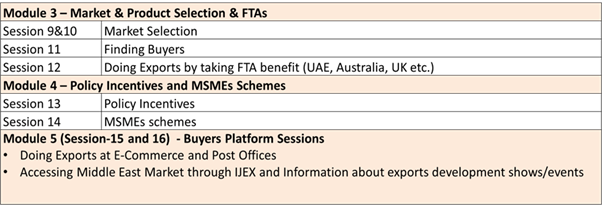
The EMP-4 program has been structured into multiple modules including product and market selection, export procedures and documentation, payment systems, trade finance, Free Trade Agreements (FTAs), policy incentives, digital platforms, and buyer-connecting mechanisms.
The program follows a phased approach beginning with knowledge sessions and progressing toward practical application and handholding for onboarding support for export platforms. Participants are guided through real-time exercises, documentation practices, and market analysis tools to ensure that the learning translates into actionable export strategies.
Details of the One–Month Exporter Mentorship Program
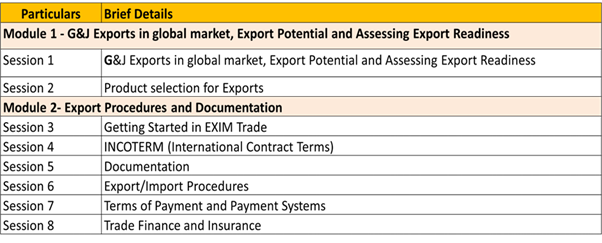
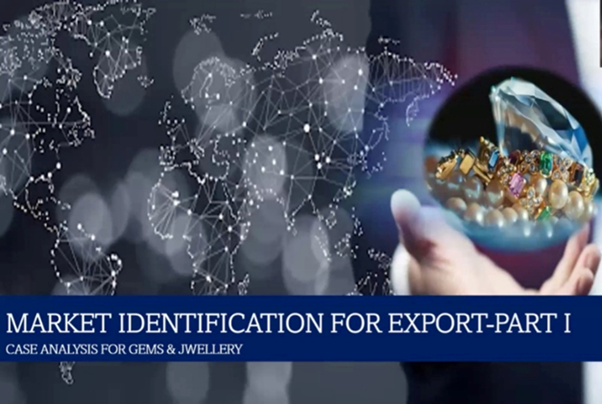
Product Identification and Market Selection
- Identification of export-ready products through structured HSN code mapping and product positioning.
- Access to global demand and import trend data to evaluate real market potential.
- Hands-on training on using international trade databases for product and market analysis.
- Framework to assess competition, pricing, and comparative advantage before selecting export products.
- Guidance on selecting the right product–market combination based on duties, logistics cost, and certification requirements.
- Practical exercises to shortlist target markets and viable product categories for each participant.
Compliance, Documentation, and Finance Training The program provided detailed training on export procedures, documentation, and financial compliance. Participants were introduced to export documentation cycles, GST processes, shipping procedures, and payment security mechanisms. Sessions covered invoices, packing lists, certificates of origin, shipping bills, and banking procedures. Training on payment terms, letters of credit, escrow systems, and export finance ensured that participants understand risk mitigation and secure transaction practices. Government schemes, policy incentives, and MSME support frameworks were also explained to help exporters utilise available benefits effectively.
TAs, and Reaching to Indian Diaspora as Market Entry Strategy
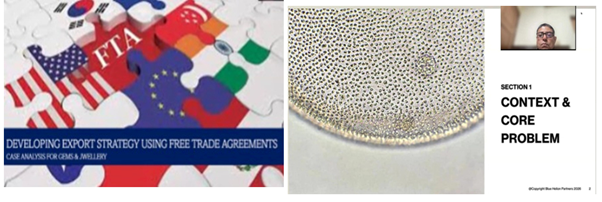
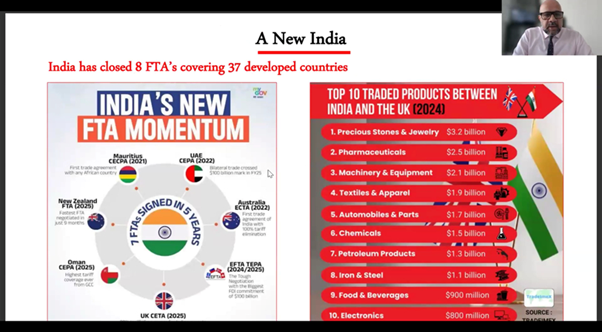
The program also included sessions on leveraging Free Trade Agreements, digital marketplaces, and buyer-connecting platforms. Participants were trained to understand tariff advantages, rules of origin, and pricing competitiveness in FTA markets. Digital export channels, e-commerce platforms, and diaspora-based market entry strategies were discussed to help participants access global buyers. The structured training approach ensures that participants are equipped not only with knowledge but also with pathways to connect with international markets and convert learning into export transactions.
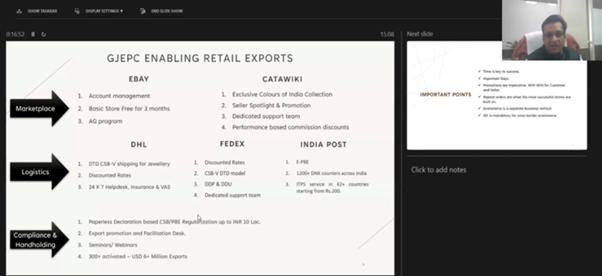
Buyer Connecting Platforms- E-Commerce, IJEX, Trade Shows/BSMs
A focused module on Buyer Connecting Platforms was delivered to provide participants with structured access to international markets through both institutional and digital channels. The sessions covered engagement through IJEX – India Jewellery Exposition Centre, Dubai, highlighting its role in facilitating Middle East market access, buyer-seller meetings, and re-export opportunities. In addition, dedicated sessions on cross-border e-commerce exports guided participants on cargo classification, documentation requirements, AD code registration, shipping procedures, and onboarding on digital platforms. Practical insights were provided on selecting the appropriate channel based on product type, shipment value, compliance norms, and target market dynamics, enabling participants to move from theoretical learning to actionable buyer connection strategies.
Way Forward
Through its structured sessions and mentoring approach, the EMP-4 program is enabling participants to transition from domestic business operations to export-oriented enterprises. The training provides clarity on product selection, market entry, compliance requirements, and financial planning, thereby strengthening export readiness across participating units.
By supporting 85+ participants through a one-month intensive program, the initiative contributes to building a stronger exporter base within the gems and jewellery sector and supports the broader national objective of expanding India’s global trade presence.
source:GJEPC


National News
KISNA Diamond and Gold Jewellery Rolls Out Nationwide ‘Shop Sparkle Win’ Campaign Across 218 Cities, With 823 Vehicles Up For Grabs
The campaign will run through the first week of December 2026, with customers eligible to participate on diamond jewellery purchases worth ₹25,000 and gold jewellery purchases worth ₹75,000


KISNA KISNA Diamond and Gold Jewellery, one of India’s foremost jewellery brands, has rolled out its nationwide KISNA Shop Sparkle Win Campaign ’26 across 218 cities in 24 states, offering customers the opportunity to win 823 vehicles, comprising 247 cars and 576 scooters, during the festive season.
Customers receive one lucky draw coupon on diamond jewellery purchases worth Rs. 25,000 and one coupon on gold jewellery purchases worth Rs. 75,000. The campaign comprises three lucky draws and will continue through the first week of December 2026, culminating in the final draw for the car prizes.
Timed around one of the country’s key jewellery-buying periods, Shop Sparkle Win adds an element of excitement to festive purchases. Eligible coupon holders are invited to their respective KISNA stores, where winners are selected through a live ballot process, bringing the celebration closer to customers across markets.
Speaking on the campaign, Ghanshyam Dholakia, Founder & Managing Director, Hari Krishna Group, said,
“Festivals are moments when families come together to celebrate traditions, relationships and new beginnings, and jewellery has always been an integral part of these occasions. At KISNA, we have consistently looked at ways to make these moments more memorable and rewarding. Following the strong response to our previous Bumper Lucky Draw, KISNA Shop Sparkle Win Campaign ’26 takes this approach forward at a wider scale, enabling us to celebrate with customers across the country.”
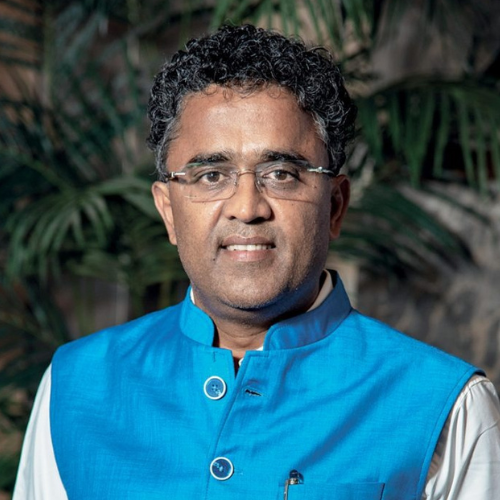
Parag Shah, CEO, KISNA Diamond & Gold Jewellery, added,

“Jewellery purchases today are shaped not only by design and craftsmanship, but also by the value, flexibility and assurance customers receive through the buying journey. Our proposition addresses these considerations through initiatives such as the Gold Rate Protection Scheme, old gold exchange options and our diamond jewellery buyback programme. Customers can avail up to 95% exchange value on diamond jewellery, including making charges, providing greater flexibility and long-term value beyond the initial purchase.”
The campaign is being amplified through BTL activations, social media and digital campaigns across markets. Building on KISNA’s earlier customer reward initiatives, including the Bumper Lucky Draw and #Shop_Sparkle_Win reflects the brand’s continued focus on strengthening its retail proposition and creating more engaging jewellery-buying experiences across India.



KISNA Diamond and Gold Jewellery Rolls Out Nationwide ‘Shop Sparkle Win’ Campaign Across 218 Cities, With 823 Vehicles Up For Grabs

Nemichand Bamalwa Creates Nav Avatar Necklace For Maa Durga At Indian Museum’s Durga Puja

Kangana Ranaut Unveils PNG Jewellers New Showroom In Ayodhya~

GGJS 2026 Concludes With High-Volume Trade and Strategic Focus On Next-Gen Leadership
Nemichand Bamalwa Creates Nav Avatar Necklace For Maa Durga At Indian Museum’s Durga Puja
KISNA Diamond and Gold Jewellery Rolls Out Nationwide ‘Shop Sparkle Win’ Campaign Across 218 Cities, With 823 Vehicles Up For Grabs
-
 National News8 hours ago
GGJS 2026 Concludes With High-Volume Trade and Strategic Focus On Next-Gen Leadership
-
 National News3 hours ago
Nemichand Bamalwa Creates Nav Avatar Necklace For Maa Durga At Indian Museum’s Durga Puja
-
 National News3 hours ago
KISNA Diamond and Gold Jewellery Rolls Out Nationwide ‘Shop Sparkle Win’ Campaign Across 218 Cities, With 823 Vehicles Up For Grabs
-
 New Premises7 hours ago
Kangana Ranaut Unveils PNG Jewellers New Showroom In Ayodhya~
