National News
GJC CALLS 67% HIKE IN GOLD HALLMARKING CHARGES UNWARRANTED; SEEKS IMMEDIATE REVIEW
Council Says Priority Should Be Strengthening Enforcement, Addressing Existing Market Distortions and Keeping Genuine Compliance Affordable

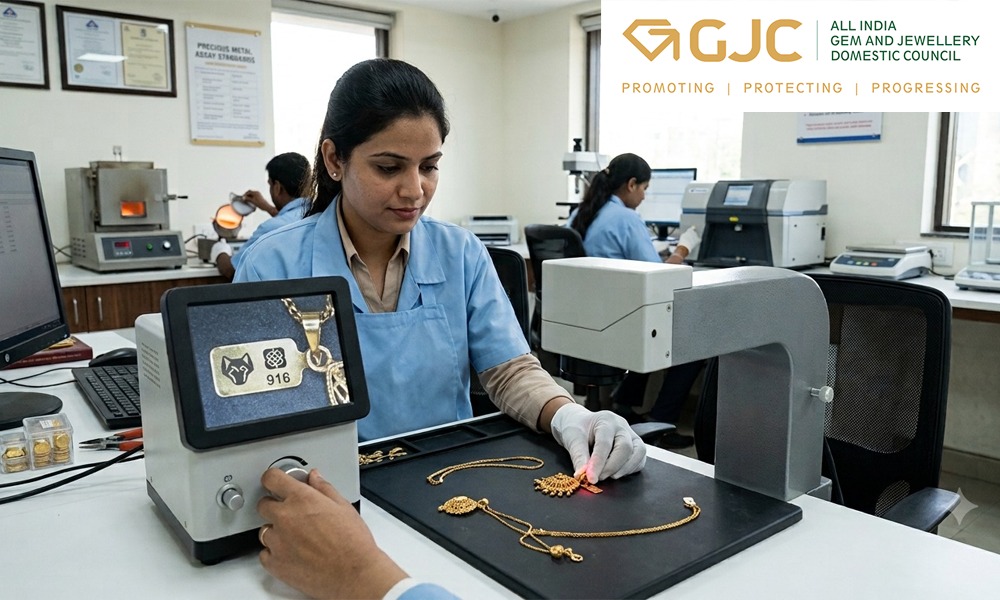
All India Gem & Jewellery Domestic Council (GJC) has expressed strong concern over the increase in gold hallmarking charges from Rs 45 to Rs 75 per article and has urged the Government and the Bureau of Indian Standards (BIS) to immediately review the decision and retain the existing charge pending stakeholder consultation.
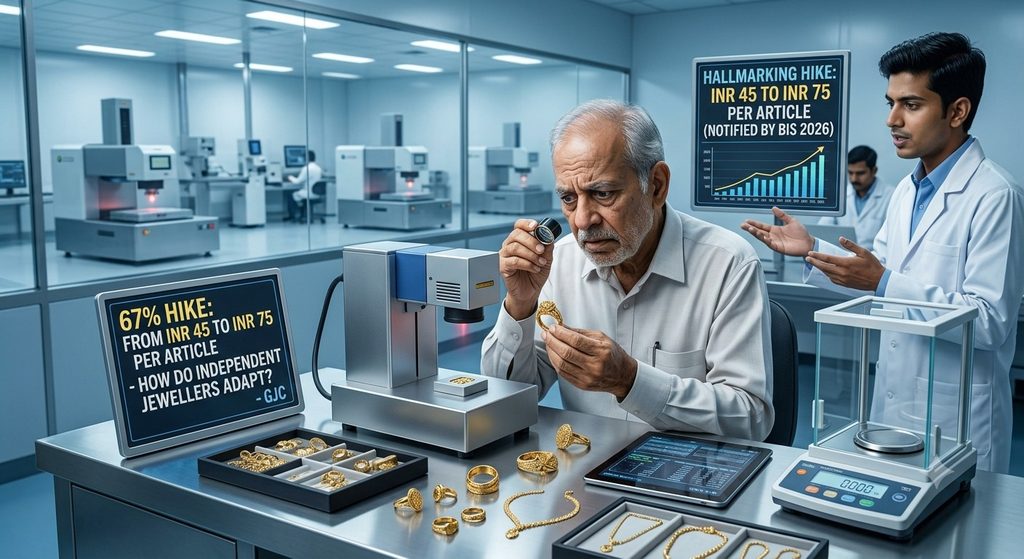
The increase has been notified through the Bureau of Indian Standards (Hallmarking) Amendment Regulations, 2026, dated 14 September 2026. Under the amended Schedule IV, the hallmarking fee payable by jewellers to recognised Assaying and Hallmarking Centres (AHCs) for gold articles has been fixed at Rs 75 per article.
This represents an increase of approximately 67% in one stroke over the prevailing charge of Rs 45 per article.
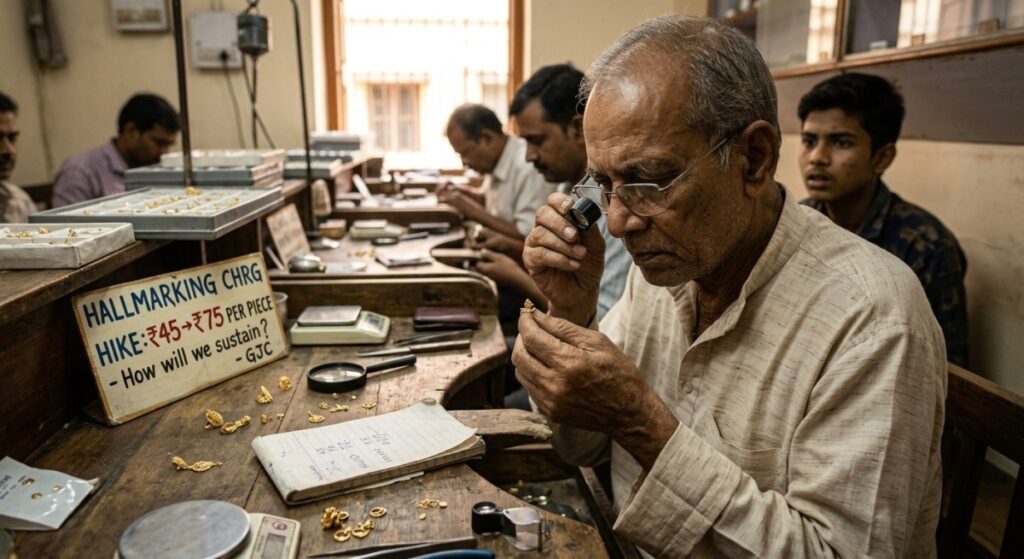
GJC has consistently supported hallmarking as an important measure for ensuring purity assurance, transparency and consumer protection. Its objection is therefore not to hallmarking, but to the sharp escalation in the cost of mandatory compliance at a stage when hallmarking volumes and geographical coverage have substantially expanded.
According to Government data (PIB), more than 60 crore gold articles had been hallmarked with HUID between 1 July 2021 and 5 March 2026, while mandatory hallmarking had progressively expanded to 380 districts by March 2026. BIS also stated that more than 30 enforcement actions against jewellers were undertaken during 2025-26.
GJC believes that such growth in volumes should ordinarily lead to greater efficiencies and economies of scale. A 67% increase in the per-article charge therefore deserves a transparent assessment of the underlying cost structure before being passed on to the trade and ultimately to the consumer.
EXISTING MALPRACTICE AND ENFORCEMENT ISSUES REQUIRE PRIORITY ATTENTION
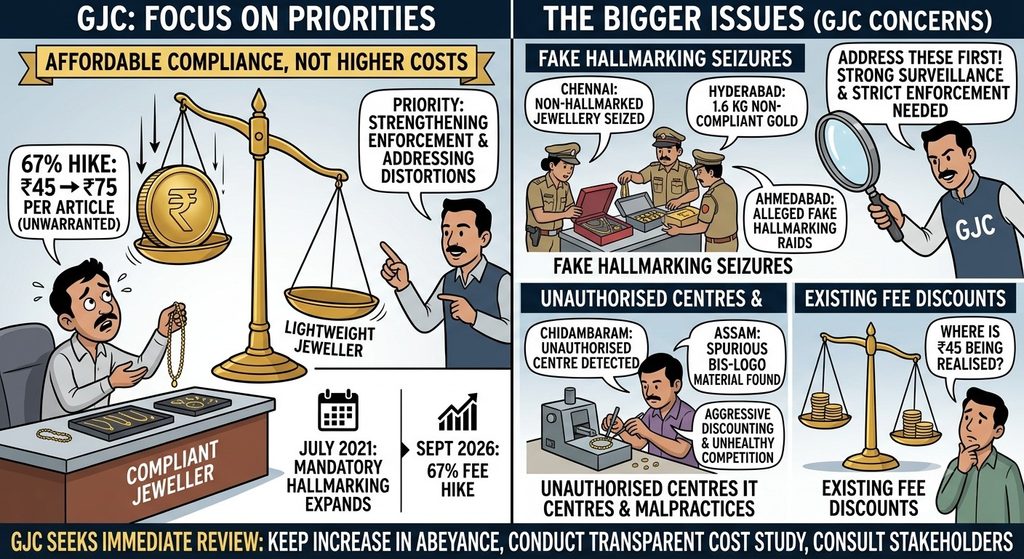
GJC is concerned that increasing the prescribed hallmarking fee does not address the more fundamental issues already affecting the hallmarking ecosystem. The Council has received industry feedback regarding aggressive discounting, commercial inducements and unhealthy competition among certain service providers for securing hallmarking volumes. Where the prescribed rate itself is not uniformly realised in practice, merely increasing the notified fee from Rs 45 to Rs 75 may not resolve the underlying viability and governance concerns.
More importantly, BIS’s own enforcement actions show that fake, unauthorised and non-compliant hallmarking remains a continuing concern across the country. Recent actions include seizure of non-hallmarked jewellery at Ambattur, Chennai in September 2026; detection of over 5.4 kg of allegedly fake-hallmarked jewellery at Panruti and an unauthorised hallmarking centre at Chidambaram in 2025; seizure of around 1.6 kg of non-compliant gold jewellery at Hyderabad in June 2026; raids involving alleged fake hallmarking and invalid registration at Ahmedabad in July 2026; action against alleged fake hallmarking centres at Guwahati and Goalpara, Assam, including seizure of laser-marking equipment and spurious BIS-logo material; and seizure of jewellery bearing spurious hallmark symbols without valid HUID at a BIS-registered jeweller in Kanyakumari in July 2026.
These actions demonstrate that the immediate priority should be stronger surveillance, stricter enforcement and greater discipline within the hallmarking ecosystem. Increasing the charge payable by compliant jewellers cannot substitute for addressing fake hallmarking, unauthorised operators and other market distortions.
HIGHER COMPLIANCE COST CAN WIDEN THE FORMAL–INFORMAL DIFFERENTIAL
GJC further cautions that the economics of compliance cannot be considered in isolation.
Whenever the cost of operating within a formal regulatory framework increases materially, while unauthorised or informal alternatives continue to exist, the economic differential between compliant and non-compliant activity widens.
The objective of public policy should therefore be to make genuine compliance easier and economically preferable, rather than increase the cost advantage available to persons operating outside the prescribed framework.
Hallmarking is a mandatory consumer-protection mechanism. It should consequently be affordable enough to encourage universal compliance, while enforcement should be strong enough to make non-compliance commercially unattractive.
Increasing the hallmarking charge from Rs 45 to Rs 75 — without simultaneously addressing fake hallmarking, unauthorised centres and other market distortions — risks producing precisely the opposite incentive.
Impact is disproportionately higher on lightweight jewellery
The burden is particularly significant in the case of lightweight and lower-value jewellery.
BIS itself clarifies that hallmarking charges are levied per article irrespective of the weight of the jewellery.
Accordingly, the same Rs 75 charge applies whether the article weighs one gram or substantially more. The percentage impact of the fee is therefore much greater on lightweight products commonly purchased by middle-income and mass-market consumers.
At a time when gold prices are already at elevated levels, adding substantially to the fixed compliance cost of every article ultimately increases the cost borne somewhere in the value chain.
GJC SEEKS REVIEW, NOT DILUTION OF HALLMARKING
Rajesh Rokde, Chairman, GJC, said:

“GJC and the jewellery industry have consistently supported hallmarking because purity assurance and consumer confidence are fundamental to our trade. But support for hallmarking does not mean that a nearly 67% increase in the cost of mandatory compliance should pass without examination. Hallmarking volumes have expanded enormously. The industry therefore deserves to understand why the per-article charge needs to rise from Rs 45 to Rs 75 at this stage.”
He added: “BIS’s own enforcement actions across Chennai, Hyderabad, Ahmedabad, Assam and other locations demonstrate that fake hallmarking, unauthorised operations and non-compliance remain serious concerns. Before increasing the burden on compliant jewellers, the priority should be to address these distortions and strengthen enforcement. Increasing the official fee does not by itself make the hallmarking ecosystem stronger.”
Avinash Gupta, Vice Chairman, GJC, said:
“Compliance must remain commercially sustainable. If the compliant route becomes progressively more expensive while informal and unauthorised channels continue to operate, the differential between the two widens. That is not desirable either for the Government, the industry or the consumer.”
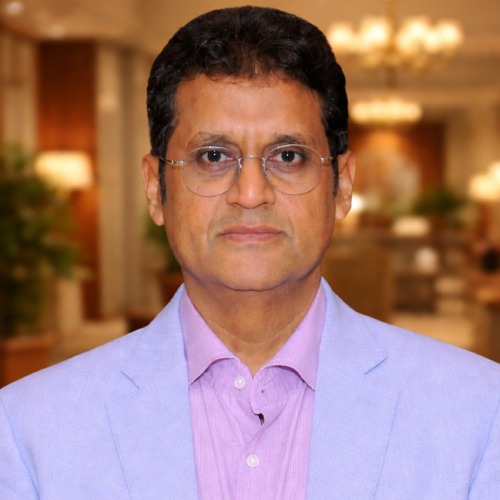
He further stated: “There are also industry concerns regarding aggressive discounting and commercial inducements in the race for hallmarking volumes. If Rs 45 itself is not being uniformly realised across the market, the first question should be why that is happening and whether the present economic model requires correction. Simply prescribing Rs 75 without studying actual market practices may not address the underlying problem.”
GJC urges the Government and BIS to:
- Keep the increase from Rs 45 to Rs 75 per article in abeyance and continue the existing Rs 45 charge until a comprehensive review is completed.
- Undertake a transparent cost study of recognised Assaying and Hallmarking Centres, including capital cost, operating cost, volumes, capacity utilisation and reasonable return.
- Examine the actual charges being realised by AHCs vis-à-vis the prescribed rate, including discounts, rebates, commercial inducements or other market practices.
- Intensify enforcement against fake hallmarking, unauthorised AHCs, misuse of the BIS logo and jewellery sold without valid HUID.
- Consult GJC, representatives of jewellers, manufacturers and AHCs before implementing any substantial revision in the cost of mandatory compliance.
- Consider whether rising volumes and greater capacity utilisation can enable economies of scale to stabilise or reduce the per-article charge.
- Examine a differentiated or more rational mechanism for lightweight and lower-value jewellery, where a uniform per-piece fee creates a disproportionately higher burden.
GJC reiterates that the domestic jewellery industry fully supports genuine hallmarking and stringent action against those who misuse the system.
The Council’s concern is straightforward: a regulatory system achieves maximum compliance when genuine compliance is affordable, enforcement is credible and malpractice is economically unattractive.
At this stage, increasing the gold hallmarking fee by nearly 67%, without first addressing the distortions already visible in the ecosystem, is in GJC’s view unwarranted and deserves immediate reconsideration.


National News
5 Ways To Elevate Your Diwali Style With Diamond Stacking
Discover five stylish ways to layer, mix and stack natural diamond jewellery this Diwali, creating festive looks that blend timeless elegance with contemporary personal style.

The best Diwali looks begin with light. It catches on silk, reflects off sequins and comes alive in the brilliance of a natural diamond. This festive season, let your jewellery take centre stage with a little more sparkle and a lot more personality.
From intimate family gatherings and card parties to glamorous Diwali soirées, jewellery is often what completes the festive look. And while a statement piece will always have its place, this season is all about a more personal approach to dressing up: layering, mixing and stacking your favourite pieces to create a look that feels distinctly your own.
Real diamonds lend themselves beautifully to this way of styling. Their timeless versatility allows them to move effortlessly from traditional to contemporary, from understated afternoon celebrations to dressed-up evenings. The key is knowing what to layer, where to add sparkle and when to let a single piece shine.

Here are five ways to make natural diamonds part of your Diwali style story this season:
Layer your necklaces for a modern festive neckline There is something effortlessly glamorous about layered necklaces with festive Indianwear. The trick is to play with length, proportion and scale rather than making every piece compete for attention. Start with a rare diamond solitaire pendant and layer it with a slightly more substantial necklace or a contemporary tennis necklace. With a traditional silk saree or an embellished blouse, richer layers can complement the grandeur of the outfit. With a simpler kurta, saree or lehenga, delicate diamond layers can bring just the right amount of luminosity. Think of it as building your look one layer at a time. The aim is not uniformity, but dimension.
Make a statement with a stack of diamond rings The days of keeping every ring perfectly matched are giving way to a more expressive approach. This Diwali, mix shapes, sizes and silhouettes to create a ring stack that feels personal. Try pairing a classic round diamond with a crisp emerald cut or contrast a sleek band with a more sculptural statement ring. And don’t feel the need to keep every ring on one finger. Spread your stack across both hands for a look that feels more effortless. The beauty of asli diamonds is that every piece brings its own character to the combination. Together, they create a look that feels considered without looking overly styled.
Give festive dressing a contemporary twist with ear stacking If you want to bring a youthful edge to traditional festive dressing, look no further than your ears. Start with a diamond stud or a pear-shaped diamond on the lobe, then build upwards with smaller round studs, delicate hoops or an elegant ear cuff. Mixing different sizes and silhouettes creates a subtle cascade of sparkle without taking away from the rest of your jewellery. It works particularly well with a sleek low bun, a side-swept hairstyle or an updo that leaves the ears beautifully exposed. Paired with a saree, lehenga or even a sharply tailored festive look, an ear stack can make classic dressing feel instantly more contemporary.
Layer your bracelets for a little wrist drama A festive outfit deserves a little sparkle every time you move. This Diwali, let your wrists do some of the talking. Pair a natural diamond tennis bracelet with classic gold bangles, a diamond cuff or a delicate chain bracelet. The contrast between the fluid brilliance of diamonds and the structured form of traditional bangles creates an effortlessly modern combination. For daytime celebrations, keep the layers lighter and more delicate. Heading to a Diwali party in the evening? Add a little more drama with varied bracelet widths and textures. The secret is to mix rather than match. Different pieces can sit beautifully together without looking like they were bought as a set.
Mix the old with the new and make it your own Perhaps the most personal way to embrace jewellery stacking is to forget the rules altogether. Pair a traditional diamond pendant with contemporary solitaire earrings. Wear a tennis necklace with a classic festive saree. Or bring an heirloom diamond into the mix with a newer piece, creating a combination that brings different chapters of your life together. This is where natural diamonds have a particular resonance. They are not pieces that need to be saved for one occasion. They can become part of your everyday wardrobe, be dressed up for Diwali and return again for birthdays, anniversaries, weddings and all the moments in between.
Ultimately, jewellery stacking is less about following a formula and more about finding combinations that feel like you. Start with the pieces you love, experiment with proportions and don’t be afraid to mix the traditional with the unexpected.
Because while trends may change, the value of a real diamond goes beyond the season. It is its brilliance, rarity and the meaning it gathers over time that makes it something to wear, return to and pass on.
This Diwali, let your jewellery tell your story, one layer, one sparkle and one memorable celebration at a time.

-

 JB Insights6 hours ago
Jewellery Advertising and Promotion Hijacked By AI and Algorithms
-

 National News7 hours ago
P N Gadgil Jewellers Limited – Diwali Sales Update
-

 National News4 hours ago
5 Ways To Elevate Your Diwali Style With Diamond Stacking
-

 BrandBuzz10 hours ago
UNTAME Launches In India With Versatile Everyday Fine Jewellery